
A student’s first experience with opera


This story is part of a series of 50 stories we are releasing to commemorate 50 years of opera in West Michigan. Browse more stories and follow our journey throughout the season.


A recipient of Opera Grand Rapids’ five-dollar student ticket program shares her first opera experience and why she believes the performing arts should be accessible to everyone, not just those who come from a background of privilege.

“Art is a way of living,” says Kelsey May. She sees the creative process everywhere, from great works of literature to the banality of everyday obstacles. For Kelsey, living is more of an art than a math problem. “Even if you do have a plan, intentions, and goals, how those goals are met changes, and because of the mistakes you make along the way, it never ends up being the exact plan you had in your mind.” Whether it’s an unexpected hurdle with a child, or simply an accident blocking the highway, Kelsey sees creativity as the force behind most solutions.

She has witnessed firsthand how teaching young minds the power of creativity can fill their spirit and pace them for success. As the Education Coordinator at a Boys and Girls Club in Grand Rapids, Kelsey’s duties are broad: she teaches, helps with homework, does yoga, and creates gardens with students. She feels enriched by a very broad range of interests, and she wants to be sure the children in her care are exposed to as many opportunities as possible. Her own mother’s investment in her education meant she was reading at three years old. The result wasn’t just advanced literacy—her mother helped cultivate a bright inner life that she retains to this day.

“I read every day, and I try to write every day as well,” she says. Kelsey is a poet and podcast host who also loves music and photography. She is also a frequent theatergoer, when time and money allow. It was only a matter of time until she made it to the opera. But she was initially a bit apprehensive. “When you say ‘opera,’ I start picturing this gorgeous building in France, like in Phantom of the Opera. Everyone is all dolled up and getting dropped off in their carriages, and the door is held open for them. It’s a mindset of luxury.” There is certainly some truth to this; opera and high society often go hand in hand. But many people aren’t aware that there are low-cost inroads to opera, and the art form is more inclusive and welcoming to the uninitiated than ever.

Kelsey hadn’t considered opera until a professor of hers suggested the idea. She wasn’t aware of Opera Grand Rapids’ five-dollar student tickets at the time, so a low-cost ticket was incentive enough to wade into an unfamiliar art form.

Tosca, 2015

Her first opera was filled with surprises. “I didn’t know beforehand that it was going to be in a foreign language, which speaks to my never having attended before,” she says with a laugh. She was surprised, but grateful, for the supertitles. Even as someone new to opera, the talent of the singers and the elegance of the production left an impression. “The people who were performing were just amazing. Their voices had so much emotion,” she says. “The stage, the set design, the costumes were all beautiful. It was a great experience in the theater.”

Opera Grand Rapids is committed to bringing students and newcomers through our doors—not just for us, but for the future of opera. For many people, an opera ticket is more than they can justify for an evening’s entertainment. If those people have never seen a live opera, they likely never will. Kelsey echoes a sentiment we hear from students often: “My husband and I have to be really picky with where we can go to a concert or attend a musical, just based on our income. The fact that I could still see the show and appreciate the art, but have it be accessible for my level of income, was really fantastic.”

People like Kelsey are why OGR offers five-dollar tickets to students, whether they are in middle school or getting their PhDs. As a young renaissance woman, Kelsey is the perfect face of our next generation of fans. As a writer and educator, she is a conduit for her newfound appreciation of opera. In fact, after attending Tosca at OGR, she wrote about her experience for HowlRound, a website dedicated to writing about the theater.

Student Dress Rehearsal, Tosca 2015

From her article “Art for All: My First Experience with Opera” at HowlRound: “As a working-class college student, it is easier to splurge on dinner at Olive Garden than shell out enough to see an opera, let alone sit only twenty rows from the stage! But the fact that I was offered the opportunity to go speaks to the attitude of Opera Grand Rapids—that the performing arts should be accessible to everyone, not just those who come from a background of privilege.”

We’re very pleased to enable students like Kelsey to experience what we do. We’re also grateful to the donors and schools whose sponsorship allows us to offer low-cost student tickets. Kelsey’s perspective on creativity and art as a way of understanding life is one we love to see passed to future generations. If all of our new patrons are as inspiring, enthusiastic, and eloquent, our art form has a bright future in Grand Rapids.


OUR FOUNDERS HAD A BOLD PROPOSITION: to build a professional opera company that would put Grand Rapids on the map for a very discerning audience. 50 years later, we are humbled to be the modern bearers of classical standards and modern ingenuity. Learn more.


SUPPORT OUR NEXT 50 YEARS

As an integral part of our city’s artistic fabric, it’s our responsibility to see to its continual flourishing. Please consider donating to Opera Grand Rapids to ensure our artistic excellence for the next 50 years and beyond. You’ve already made us great. With your support, there’s no limits to the height our voices can reach together. Give today.

Maestro James Meena on his role as Artistic Director


This story is part of a series of 50 stories we are releasing to commemorate 50 years of opera in West Michigan. Browse more stories and follow our journey throughout the season.


If opera is a disaster waiting to happen, then Maestro Meena is the last line of defense against a production’s unraveling.

“Opera is a disaster waiting to happen,” says Maestro James Meena. As Artistic Director of Opera Grand Rapids, Meena is the first and last line of defense against a production’s unraveling. “As a conductor, you have to be extremely ready to handle the disasters.” As frequent readers will recall, keeping chaos at bay is a common theme among opera professionals. This is not because they’re dour people, but rather a testament to the delicacy of the artform. Opera’s challenge, simply stated, is to stage a musical play and conduct a symphony at the same time, with a full complement of lighting, props, and sound design.

Even if there are no proper disasters, there is a very real potential that the entire spectacle may fall out of step with itself. The audience does not attend grand opera to be underwhelmed. To deliver the caliber of production our audience expects requires advanced strategic planning, finding the right people, and a demanding practice schedule. Meena is at the center of this process.

Barber of Seville, 2017

“Every element that we would call an artistic element of the product is ultimately my decision. It’s a collaborative artform, so I work with the director on what the production is going to be looking like. Selecting a production and getting a director who has the same aesthetic is very important,” says Meena. The winding road the maestro took to his current role prepared him well for its sundry demands.

“I sort of backed into opera,” says Meena. He took up the cello at age six and played in his school’s youth orchestra in Los Angeles. In the following years, he would pick up instruments as his family moved around the country. He learned piano and sang in church. For a year, his interest drifted toward the visual. At sixteen, Meena assembled a portfolio and began applying to art schools. But his love of music was unshakable. A successful audition at Baldwin Wallace Conservatory cemented Meena’s identity as a lifelong student of music. Young people full of passion but lacking direction might take consolation from his example. “It’s not been a straight line,” he says. “But that’s normal for kids.”

His winding road to Artistic Director had another important stop: that of symphonic conductor. Meena was recently married and supporting his family with his work when a call came in from Pittsburgh Opera. They wanted to know if he’d like to help stage their production of Turandot. They asked if he knew the show, and if he was interested. He was not. “At that point, I had no interest in going to the opera. I was going to be a symphonic conductor.” Naturally, he agreed immediately. “I said, ‘Of course I want this job,’” says Meena. The working artist rarely has the luxury of refusal. “Voila! I’m suddenly the Associate Conductor of the Pittsburgh Opera, and haven’t looked back since.”

Meena still conducts symphonies all over Europe and the United States. “I enjoy conducting Brahms Symphonies, Tchaikovsky symphonies, Mozart, and great contemporary pieces.” But he is very happy to spend the majority of his time in the opera house.

Rigoletto, 2017

“It helps to really like working with singers,” he says with a wry smile. The notion of the larger-than-life singer is an archetype for a reason, and to be a successful opera professional, it helps to enjoy navigating that reality. “Their neuroses are really interesting. Helping, guiding them, and allowing them to be the best performer possible is not unlike working with a pianist or a violinist on a concerto, but the neuroses are much higher. The personalities are much bigger. It is grand opera, after all.”

In addition to being a mentor and ringmaster, the role of Artistic Director requires vision and adaptation. To that end, Meena is part of Opera Grand Rapids’ exciting collaboration with Opera Carolina and Toledo Opera. “These are companies that share an aesthetic. We also share an interest in performing at a very high level.” According to Meena, pooling our resources with these two companies elevates the standards for all involved. Besides saving up to thirty percent in production costs, the collaboration model allows us to present singers with very attractive contracts—seven or eight performances is much more lucrative than two. Much like the performances themselves, Meena is one of those chiefly responsible for ensuring a smooth collaboration between companies in three different cities. “If we do it right, each of the cities will benefit.”

So far, the maestro seems to be doing it right. Many of Meena’s performances have been recorded and broadcast over National Public Radio’s World of Opera, and he routinely receives plaudits from critics the world over.

Even at his level of expertise, the job stays interesting. No matter how meticulous the casting, how prepared the musicians, there is always a chance for chaos to intrude. There is a chance, for instance, that the principal singers will hate each other.

“Nightmare experiences in the opera are a common occurrence,” says Meena with a laugh. “Probably the worst experience I had was doing La bohème. The first day of rehearsal, the Rodolfo and the Mimi hated each other.” In the opera, the two characters fall in love immediately. In real life, the sparks flew right away, but not in a way that was helpful to the production. “If you don’t have chemistry between those two, it’s going to be a war from the beginning, and this was a war from the beginning. By the time we got to the performance, they wouldn’t look at each other.”

Most of the time, though, Meena and his expert colleagues can hide any cracks in a performance. He knows his audience is perceptive; opera courts a large segment of connoisseurs. He understands this as a connoisseur himself, and feels a duty to deliver the opera he would like to experience as a member of the audience.

We are fortunate to benefit from his unique vision. As a conductor, director, lover of music, and businessman, Maestro Meena’s own winding path to Artistic Director has made him an excellent guide.


OUR FOUNDERS HAD A BOLD PROPOSITION: to build a professional opera company that would put Grand Rapids on the map for a very discerning audience. 50 years later, we are humbled to be the modern bearers of classical standards and modern ingenuity. Learn more.


SUPPORT OUR NEXT 50 YEARS

As an integral part of our city’s artistic fabric, it’s our responsibility to see to its continual flourishing. Please consider donating to Opera Grand Rapids to ensure our artistic excellence for the next 50 years and beyond. You’ve already made us great. With your support, there’s no limits to the height our voices can reach together. Give today.

Why opera: the community’s cultural capital


This story is part of a series of 50 stories we are releasing to commemorate 50 years of opera in West Michigan. Browse more stories and follow our journey throughout the season.


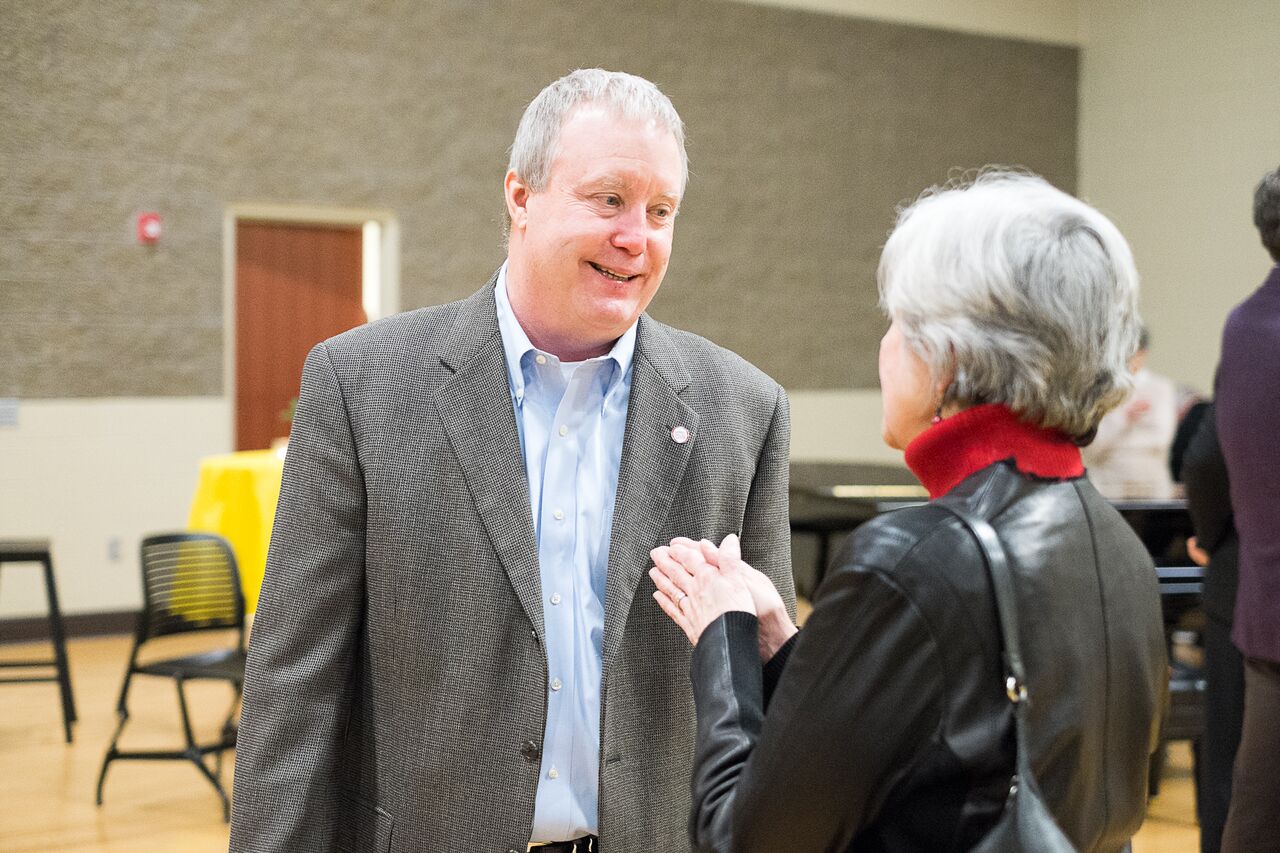
Grand Valley State University President Tom Haas and Community Relations Director Pat Waring on the importance of cultural capital in West Michigan.


OUR FOUNDERS HAD A BOLD PROPOSITION: to build a professional opera company that would put Grand Rapids on the map for a very discerning audience. 50 years later, we are humbled to be the modern bearers of classical standards and modern ingenuity. Learn more.


SUPPORT OUR NEXT 50 YEARS

As an integral part of our city’s artistic fabric, it’s our responsibility to see to its continual flourishing. Please consider donating to Opera Grand Rapids to ensure our artistic excellence for the next 50 years and beyond. You’ve already made us great. With your support, there’s no limits to the height our voices can reach together. Give today.

Giving thanks to the N.E.A. amid uncertain times


This story is part of a series of 50 stories we are releasing to commemorate 50 years of opera in West Michigan. Browse more stories and follow our journey throughout the season.


Despite the fact that the National Endowment for the Arts is sometimes a hot political topic (the President’s current budget proposal would eliminate the program entirely), the organization itself endeavors to remain outside politics and cultural feuds. In allowing the organizations it funds the freedom of expression, the Endowment often finds itself in contentious cultural conversations.

It’s an unpalatable truth: most arts organizations simply wouldn’t exist as purely capitalistic ventures. Like almost all regional opera companies, Opera Grand Rapids is no exception. Ticket sales, while vital, constitute only a portion of the funds necessary to hire singers and staff, maintain facilities, and produce season after season of shows in the grand operatic tradition.

Our opera’s existence relies on the generosity of our donors, ticket sales, volunteers, and funds from the National Endowment for the Arts. Just like many artists and opera houses, we love what we do, but we couldn’t do it without the support of a willing public. At a time of year traditionally reserved for gratitude, we are pausing to reflect on the support we’ve received from our city, our patrons, our donors, and the Endowment.

The NEA was founded in 1965 with a goal distinct from previous federal arts programs, according to Mark Bauerlein’s book, National Endowment for the Arts: A History 1965-2008. Its purpose was not to create jobs like its New Deal predecessor programs. Its objectives were more aspirational. The Johnson administration’s vision of the program was taken directly from a quote by George Washington: “The arts and sciences are essential to the prosperity of the state and to the ornament and happiness of human life. They have a primary claim to the encouragement of every lover of his country and mankind.”

Despite the fact that the Endowment is sometimes a hot political topic (the President’s current budget proposal would eliminate the program entirely), the organization itself endeavors to remain outside politics and cultural feuds. The arts arena is, of course, a difficult place to be impartial. Art, by its very nature, attracts controversy; the same passion that elicits standing ovations from some will inevitably prompt shaking fists from others.

In 1984, the English National Company staged a production of Rigoletto at the Metropolitan Opera. The company, an NEA recipient, wanted to deliver a fresh take on a classic: their Rigoletto would take place in the world of the mafia, set in New York’s Little Italy. When a New York congressman named Mario Biaggi took exception to the new setting, he raised objections to NEA funding the opera, and a controversy about the program itself erupted overnight. Of course, it was never the intention of the NEA or the English National Company to disparage Italians by updating a classic Italian opera. But in allowing the organizations it funds the freedom of expression, the NEA often finds itself in contentious cultural conversations.

Nonetheless, the vast majority of recipients of NEA funds resemble Opera Grand Rapids—community and regional arts organizations that promote tourism, provide jobs, run education workshops, give residents volunteer opportunities, and increase the quality of life in their cities.

The average taxpayer contributes 46 cents to the NEA in a year. With this small personal investment, every citizen contributes to after school programs, rural art outreach, and performance companies like ours. 46 cents may sound trivial, but for companies like Opera Grand Rapids, it makes a huge impact.

Grand Rapids has benefited inestimably from the generosity of its entrepreneurs and federal funding alike: the Grand Rapids Symphony Orchestra, the West Michigan Center for the Arts and Technology, Alexander Calder’s iconic La Grande Vitesse, and OGR all owe a debt of gratitude to both private donors and the National Endowment for the Arts. We’re truly humbled to be in such august company.

Rigoletto, October 2017

While we are thankful to have enjoyed decades of sponsorship from local philanthropists, donors, and volunteers, we are also keenly aware that single artists doing good for their community often don’t have these options. That doesn’t diminish the soul-elevating impact they can have on the lives of those around them. During this season of reflection, we want to take a moment to thank those lone artists who don’t share our good fortune, yet share their talent with the world anyway.

Most importantly, we want to thank our supporters. If you’re reading this, you’re a welcome part of our world, and we’re extraordinarily lucky to have you in it. Thank you for helping make Grand Rapids a city in which we are proud to live, work, and make music.


OUR FOUNDERS HAD A BOLD PROPOSITION: to build a professional opera company that would put Grand Rapids on the map for a very discerning audience. 50 years later, we are humbled to be the modern bearers of classical standards and modern ingenuity. Learn more.


SUPPORT OUR NEXT 50 YEARS

As an integral part of our city’s artistic fabric, it’s our responsibility to see to its continual flourishing. Please consider donating to Opera Grand Rapids to ensure our artistic excellence for the next 50 years and beyond. You’ve already made us great. With your support, there’s no limits to the height our voices can reach together. Give today.

President Bob Evett on the balancing act of art and business


This story is part of a series of 50 stories we are releasing to commemorate 50 years of opera in West Michigan. Browse more stories and follow our journey throughout the season.


Opera Grand Rapids Board of Trustees President Bob Evett on the balancing act between art and business, past and future, and tradition and innovation.


Bob Evett spends his time looking in two directions at once. As the President of the Board of Opera Grand Rapids for the past year, Bob shares the helm of the company with a handful of others. That job involves a series of delicate balancing acts: art and business, past and future, tradition and innovation.

He’s candid about his experience of navigating these dichotomies. Finding a balance is a challenging and fluid process, always in motion. But for Bob, the stakes were crystallized in the memory of a visit to the opera with his daughter, years ago. “Many years ago, we came to see The Magic Flute. The music was beautiful, and the story was interesting and appealing. But the nice thing about it was that I brought my daughter, who was in fourth grade at the time, and to see her face was almost magical. She was engulfed and engaged. She brought a friend, and they were just mesmerized.”

As someone who must manage aspects of budget, development, and planning, it’s crucial for people in Bob’s role to keep the emotional core of the opera experience close at hand. This means trying to step inside the perspective of our patrons.

“I think we have to maintain a balance,” says Bob. “We have to guard, protect, and celebrate traditional opera. It is the wonder and the beauty that has gotten us where we are.” There is a core audience who has grown up with a love of the classic grand opera tradition, and Opera Grand Rapids wouldn’t be relevant to those folks if we were reinventing the wheel with every performance. Performing the classic gamut of operas in a traditional way is also a service to the next generation of potential opera fans; just as in the world of theater, a radical, contemporary version of Hamlet can be wonderful, but burgeoning theater fans deserve the opportunity to see the play as Shakespeare intended, too. Both approaches can, and do, happily coexist under a single roof all over the country. That’s where the fine art of balance comes in.

Reflecting on this, Bob says, “We have to try new things. We also have to go to other venues. The outreach is important. Society is much different today than it was ten, fifteen, twenty years ago. We have to be accessible. We have to go where they are, and then we’ll get them excited about coming to where we are when we have those beautiful grand operas.”

To that end, OGR is shaking up the way people think about opera and getting outside of our building whenever we can. When a local opera fan recently turned 104, we took one of our singers to her retirement home to sing her happy birthday. We also like to give people a taste of opera in unexpected places: since 2014, we’ve been doing “flash mob” performances, where a group of performers coalesces in a public place and performs a scene from an opera like Carmen.

Singers love sharing their art with the community, whether it’s in DeVos Hall, at a local Rotary gathering, or in the public square. They also especially enjoy empowering others to participate in the art form, whether through a lifelong learning course at the local university or our Emerging Artists program.

Bob Evett

“What’s probably most important is building relationships. Passion for the art is great; relationships really make it happen.” Bob is adamant about trying to build those relationships with a wider range of people in the community. Traditional opera is very much a product of its place and time. But the art form is often just as elegant when it’s telling stories about communities historically overlooked in the opera house, and Bob says patrons are responding to that. “We’re really starting to see more diversity in our audience,” he says. It’s important to opera as a whole and to us that people of all backgrounds and demographics feel welcome and engaged. From a business standpoint, it’s important for our growth to offer something for a wide variety of people. As artists and human beings, we’re delighted to be able to offer important stories that transcend time and place, like Maria de Buenos Aires, or the upcoming I Dream.

The innovation necessary to run a successful opera company isn’t limited to artistic concerns. Innovation on the business side is often necessary as well. During Bob’s tenure, Opera Grand Rapids has managed to perform within budget, and progressively announce its season earlier in the year, which aids the rest of the staff in its marketing endeavors.

A new partnership with Toledo Opera and Opera Carolina lets our companies share resources to recruit top talent. This means that all three companies can offer a tier of production value usually reserved for larger cities, while still maintaining artistic autonomy. “We can be extremely local, but collaborate on programming. For instance, you’re able to establish longer term contracts with the principles, you can share set design and costumes. So, we’re executing as a local opera, but with the resources of three organizations, rather than one. We have the innovation to leverage quality on one hand and efficiency on the other.”

We’re very fortunate to have a committed Board populated by people like Bob, who can use his experience with decision making at the corporate level to lead Opera Grand Rapids into the future. As we take the opera to new places (sometimes literally), Bob will be behind the scenes and in the audience, weighing decisions about the shape of opera to come.


OUR FOUNDERS HAD A BOLD PROPOSITION: to build a professional opera company that would put Grand Rapids on the map for a very discerning audience. 50 years later, we are humbled to be the modern bearers of classical standards and modern ingenuity. Learn more.


SUPPORT OUR NEXT 50 YEARS

As an integral part of our city’s artistic fabric, it’s our responsibility to see to its continual flourishing. Please consider donating to Opera Grand Rapids to ensure our artistic excellence for the next 50 years and beyond. You’ve already made us great. With your support, there’s no limits to the height our voices can reach together. Give today.