
News

Remembering trailblazing opera singer Catherine Barrow-Williams


This story is part of a series of 50 stories we are releasing to commemorate 50 years of opera in West Michigan. Browse more stories and follow our journey throughout the season.


Catherine Barrow-Williams, Opera Grand Rapids first African American opera singer, established herself during a time of unprecedented racial tension.

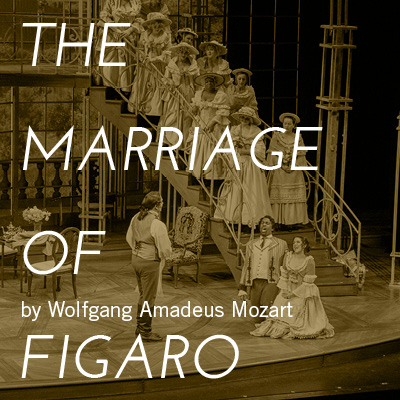
Marriage of Figaro feat. Catherine Barrow-Williams

Catherine Barrow-Williams first performance with Opera Grand Rapids took place during the long hot summer of 1967, when American cities would be decimated by race riots, and interracial marriage was a legal issue to be decided by the Supreme Court. As Grand Rapids’ first African American opera singer, Williams established herself in an overwhelmingly white art form during a time of unprecedented racial tension. She sang in The Marriage of Figaro, the very first performance by the organization that would eventually become Opera Grand Rapids. The entire production received enthusiastic reviews and put opera in Grand Rapids on the map.

Catherine Barrow-Williams

While unquestionably a trailblazer, those who knew her remember her as much for her compassion as for her courage. Known as “Mama Cathy” to those in her congregation, Catherine often opened her home to those in need. She and her husband, Bishop John, were known to provide food, transportation, and spiritual guidance to anyone who fell into their orbit.

Cathy’s zest for life can be seen in a video uploaded to Youtube by a member of her congregation. Taken just a month before she passed away, the video shows Cathy and members of her ministry on the way back from a conference in Cincinnati. As an elder of her congregation, Cathy was a spiritual leader, but that didn’t stop her from setting an example in other ways; in the video, taken in the early A.M., the bus is full of laughing, light, and singing, but it’s Cathy that stands up, claps her hands, and starts to dance.

Despite the often-fraught race relations in the late sixties, especially in her hometown of Detroit, Cathy said she always felt welcome in Grand Rapids. “God knew best. He brought me here. It was the best thing that ever happened to me, raising my kids here in Grand Rapids,” says Cathy in an interview during her final months. “As an adult, I went to Grand Rapids Community College, and I went to Grand Valley. I was a music major in school. And that was my life, singing. I was the first black opera singer here in Grand Rapids. I have been treated like royalty here. I love this town and I love the people.”

Cathy’s love for her eventual home didn’t stop her from seeing the world. As a missionary, she used the incredible gifts of her voice and her kindness to help hungry children on many continents. Said Cathy, “I’ve had the opportunity, as a missionary, to travel to over thirty countries. It’s been a wonderful life for me.” She described herself as an “instrument of peace,” and that was apparent in everything from the way she smiled to how she spent her time on earth.

Opera Grand Rapids is lucky to have had the honor of Cathy’s presence, both onstage and off. She secured her place in our history and our hearts.


OUR FOUNDERS HAD A BOLD PROPOSITION: to build a professional opera company that would put Grand Rapids on the map for a very discerning audience. 50 years later, we are humbled to be the modern bearers of classical standards and modern ingenuity. Learn more.


SUPPORT OUR NEXT 50 YEARS

As an integral part of our city’s artistic fabric, it’s our responsibility to see to its continual flourishing. Please consider donating to Opera Grand Rapids to ensure our artistic excellence for the next 50 years and beyond. You’ve already made us great. With your support, there’s no limits to the height our voices can reach together. Give today.

Haworth CEO Franco Bianchi on opera as an immersive experience


This story is part of a series of 50 stories we are releasing to commemorate 50 years of opera in West Michigan. Browse more stories and follow our journey throughout the season.


Haworth President and CEO Franco Bianchi reflects on why he loves and supports the art form.


OUR FOUNDERS HAD A BOLD PROPOSITION: to build a professional opera company that would put Grand Rapids on the map for a very discerning audience. 50 years later, we are humbled to be the modern bearers of classical standards and modern ingenuity. Learn more.


SUPPORT OUR NEXT 50 YEARS

As an integral part of our city’s artistic fabric, it’s our responsibility to see to its continual flourishing. Please consider donating to Opera Grand Rapids to ensure our artistic excellence for the next 50 years and beyond. You’ve already made us great. With your support, there’s no limits to the height our voices can reach together. Give today.
The Marriage of Figaro in Pop Culture

Opera is deeply ingrained in our popular culture. The art form has long been a rich source of themes seen in film, TV, advertisements, and more recently, video games. Opera has helped to amplify the most dramatic scenes in movies, inspired all-out parodies and fanciful plot devices, and added comic relief to a plethora of TV advertisements. Here is a collection of our favorites pop culture references to Mozart’s masterpiece of masterpieces, The Marriage of Figaro.


Mad Men

One of the first episodes in the dramatic series, Mad Men (an award-winning drama about the high-pressure and glamorous world of Madison Avenue advertising firms) titled “The Marriage of Figaro”mimics the opera’s intertwining romances. In one scene, at the birthday party of Sally Draper, the viewer can hear music from the opera in the background.


Shawshank Redemption

One particularly memorable scene from the film Shawshank Redemption captures the essence of the film’s message of inner freedom irrespective of external circumstance. In this moving scene, former banker and wrongly-accused inmate Andy Dufresne locks himself in his Shawshank State Prison office and broadcasts “Canzonetta Sull’aria” from the opera The Marriage of Figaro over the prison’s PA system for all inmates to hear. The music lifts the spirits of the inmates, as described by the narrator in the film:

“I have no idea, to this day, what those two Italian ladies were singing about. Truth is, I don’t want to know. Some things are best left unsaid. I’d like to think they were singing about something so beautiful it can’t be expressed in words and makes your heart ache because of it. I tell you, those voices soared higher and farther than anybody in a gray place dares to dream. It was like some beautiful bird flapped into our drab little cage and made those walls dissolve away, and for the briefest of moments, every last man in Shawshank felt free.”

Those words eloquently contradict the notion that opera needs to be understood in order to be appreciated, something that keeps many from opening themselves up to the art form.

So, what were ‘those two Italian ladies’ singing about? Coincidentally (or perhaps intentionally), the aria revolves around exposing duplicity and infidelity, similar to the film’s title character, Dufresne, who is framed for a murder resulting from his own wife’s extramarital affair.

The King’s Speech

In a triumphant overcoming, Bertie–later King George VI of England–is finally successful in eliminating his stammer with the aid of music from Mozart’s The Marriage of Figaro. Under the direction of his speech therapist, Bertie utilizes headphones to muffle the sound of his speech, allowing the soon-to-be King the ability to speak like one.

Willy Wonka

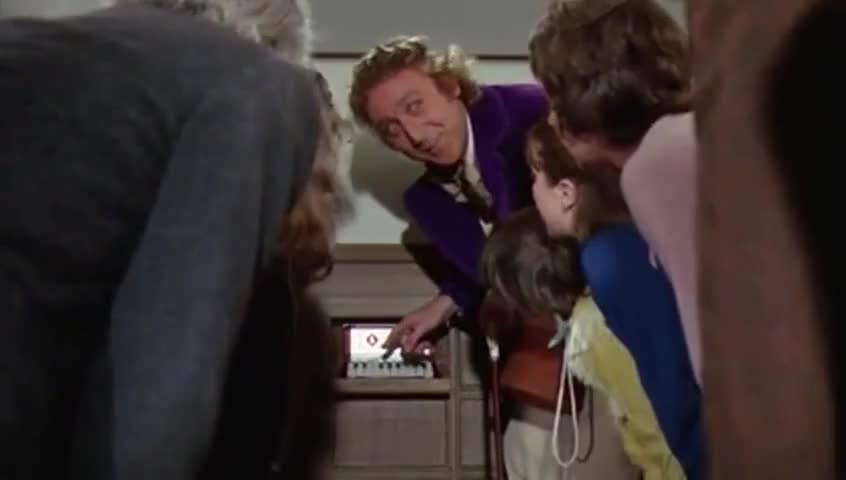
In this classic children’s film, the viewer watches Willy Wonka play the overture from The Marriage of Figaro to unlock the famous chocolate factory doors. In the scene, Mrs Teevee, one of the children’s mothers, incorrectly claims the music is composed by Rachmaninoff, giving no credit to Mozart.


Zombie Land

The 2009 American zombie comedy, Zombieland, featured the overture from The Marriage of Figaro in a scene where the characters have fun by haphazardly destroying the merchandise in an unoccupied storefront.


May 4 & 5  |  7:30 PM  |  DeVos Performance Hall

OPERA  |  CLASSIC  |  COMEDY  |  ITALIAN

The quintessential comic opera.

Tickets and more.


The Evolution of Opera Storytelling


This story is part of a series of 50 stories we are releasing to commemorate 50 years of opera in West Michigan. Browse more stories and follow our journey throughout the season.


An openness to new experiences among the young, emerging economic models, and a wealth of stories unique to the pace of life in the fiberoptic age are producing fascinating, original work for the stage. Whether your sensibilities tend toward the traditional or the bleeding edge of weird, this is the most exciting time for opera storytelling in four hundred years.

Diva Plavalaguna walks onto the stage, alone. Each tier of the house is packed to capacity with music lovers, but there is hardly a sound. Everyone present has traveled very far to see this. The orchestra, unseen, makes a few melancholy gestures as Plavalaguna takes three small steps from the shadows into the light. Her thick blue head tendrils hand in neat bunches over her shoulders. A colossal viewport behind her reveals the planet Fhloston, all ocean blue and cloud sworls. As she begins an aria from Donizetti’s Lucia di Lammermoor, her expression is beatific, as if she can see the music before her; accordingly, she scoops and caresses the air as she sings. Her skin is the blue of a child’s bedroom, and she is beautiful. The audience is enchanted.

Elsewhere on the pleasure barge, grotesque alien mercenaries are blasting their way through softly lit halls in search of their quarry. As the action escalates, so does the music. But the crescendo Donizetti aficionados expect never comes. Instead, the audience is treated to a burst of clearly-synthetic orchestra blasts. A skittering electronic drum track enters the fray, and Diva Plavalaguna is swaying like an alien flower in the breeze as her voice weaves its way through a series of impossible notes. Each melodic flourish now resembles the music of an electric violin. Her movements range between those of a sorceress and a hip-hop dancer.

The Fifth Element

Luc Besson’s 1997 sci-fi romp, The Fifth Element, was a crossover moment for contemporary opera. Its particulars suggest Besson was creating an “all-things-to-all-people” film; in 126 minutes, moviegoers are treated to the ineffably charming and often scantily-clad Milla Jovovich doing cartoonish martial arts, Bruce Willis in action mode, Chris Tucker playing a role designed for Prince (yes, the Prince), rubber-suited aliens, flying cars, and Gary Oldman rhapsodizing about the virtues of chaos in a southern accent. But ask someone about The Fifth Element today, and the extraterrestrial diva’s stirring performance is likely to come up immediately.

It was a crossover moment for opera, both musically and culturally. For many millions of Americans, the film marked the first time they had sat through an entire aria, however brief. Albanian soprano Inva Mula’s haunting rendition of Il dolce suono, a “mad scene” from Lucia di Lammermoor, was doubtlessly an entry point into the art form for many; the soundtrack sold well in the United States and elsewhere. One need only peruse internet music forums and reviews from the period to learn the techno-aria was the reason for most listeners’ interest.

The story of The Fifth Element may be riddled with robots and techno-Macguffins, but the scale and spectacle are sheerly operatic. In the twenty years since the film’s release, we have seen an explosion of fresh stories—interstellar and otherwise—told in the opera house. (As well as news operas in bars, parks, and on the internet.)

When it comes to the evolution of opera storytelling, the twentieth century was hardly conservative. After three hundred years of comparatively traditional narrative norms, worldwide upheaval and new art movements birthed avant-garde composers and librettists; they brought their sensibilities to the stage in droves. Philip Glass’s minimalism found its operatic apotheosis in 1976’s Einstein on the Beach—an absurdist five-hour production with no story whatsoever, based loosely around the titular scientist’s life.

In 1986, Harrison Birtwistle and Peter Zinovieff gave us The Mask of Orpheus. A meditation on truth, myth, and narrative itself, the opera takes place along multiple mythic, personal, and heroic axes; in practice, this means a labyrinthine production involving singers, mimes, and puppets acting out multiple versions of the same storyline simultaneously.

Die Hamletmaschine, a Wolfgang Rihm opera based on the postmodern play of the same name, is an exercise in ritualism, sensory-overload, and interpretation. Whether “The Hamlet Machine” is spiritually profound or difference borne of desperation is the audience’s decision, but no one can accuse this intentionally fractured piece of theater of playing it safe.

The storytelling sensibilities of opera have evolved alongside the rest of humanity’s conversation. Postmodernism, cinema verite, social justice movements, and a critical appraisal of opera’s own traditions are just a few factors that birthed the art form’s twentieth century mutations. In its constantly evolving modes of expression, opera becomes predictable.

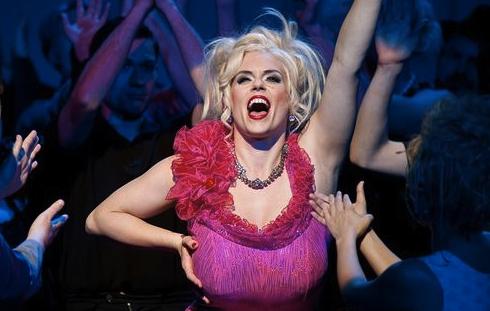
Anna Nicole Smith, The Opera

The advent of the digital age is changing the way we tell stories, and the nature of the stories themselves. Rainy Park Opera’s The Tinder Opera is an internet opera about romance in the era of the dating app. Two Boys, an opera by composer Nico Muhly and playwright Craig Lucas, is ripped-from-the-headlines story about a murder that blossomed from an internet chat room encounter. Anna Nicole is an operatic take on the life and times of tabloid icon Anna Nicole Smith.

An openness to new experiences among the young, emerging economic models, and a wealth of stories unique to the pace of life in the fiberoptic age are producing fascinating, original work for the stage. The opera enthusiast (or the casual pub-goer) can see a five-hour opera epic on the weekend, or a 10-minute opera on their phone any day of the week. And the nature of those stories includes a gamut from an operatic adaptation of David Lynch’s Lost Highway to the timeless story of The Minotaur. The narrative landscape for our favorite art form is rich, broad, and sparkling with new ideas. Whether your sensibilities tend toward the traditional or the bleeding edge of weird, this is the most exciting time for opera storytelling in four hundred years. In its varied voices, the grandest story is that of opera itself—a tale of the total work of art, sustained by passion, and ever-changing.


OUR FOUNDERS HAD A BOLD PROPOSITION: to build a professional opera company that would put Grand Rapids on the map for a very discerning audience. 50 years later, we are humbled to be the modern bearers of classical standards and modern ingenuity. Learn more.


SUPPORT OUR NEXT 50 YEARS

As an integral part of our city’s artistic fabric, it’s our responsibility to see to its continual flourishing. Please consider donating to Opera Grand Rapids to ensure our artistic excellence for the next 50 years and beyond. You’ve already made us great. With your support, there’s no limits to the height our voices can reach together. Give today.
5 Things You Didn’t Know About Opera (part 3)


This story is part of a series of 50 stories we are releasing to commemorate 50 years of opera in West Michigan. Browse more stories and follow our journey throughout the season.


The sports roots of the phrase “it ain’t over ’til the fat lady sings”, Mozart as a child prodigy, and other interesting facts you probably don’t know.

Opera has a rich 400-year legacy. It’s no wonder it’s picked up a few entertaining stories along the way. We’ve collected some of our favorites below.


Maria Callas

Castrated men sang in place of women, who were banned from the stage

In the seventeenth century, women were not allowed to sing onstage. Instead, male singers who were castrated before puberty, or castrati, would sing their parts. Today, contraltos–the lowest and most rare female voice category–are often assigned roles originally written for castrated males. Learn more.


Who coined “It ain’t over ’til the fat lady sings”

The famous saying “it ain’t over ‘til the fat lady sings” is in reference to buxom Brunhilde’s 10-minute aria at the end of Richard Wagner’s Ring Cycle. The phrase is usually attributed to professional basketball coach Dick Motta, who in turn attributes it to San Antonio sportswriter/broadcaster Dan Cook, who says he overheard a friend say it.


Opera is really an artist’s body of work

The word “opera” originates from the Latin word for word for “work” (opus). This is similar to someone’s best work being described as their magnum opus! Learn more.


Wolfgang Amadeus Mozart

Mozart wrote an opera when he was just 12 years old

Mozart wrote his first opera, Bastien und Bastienne, a parody of Jean-Jacques Rousseau’s operatic intermezzo Le devin du village (The Village Soothsayer), when he was only 12 years old. Learn more.


Richard Wagner

Wager considered writing operas about Jesus Christ and the Buddha

Later in life, Wagner, who became interested in Buddhism, is rumored to have considered writing operas about Jesus Christ and the Buddha.


OUR FOUNDERS HAD A BOLD PROPOSITION: to build a professional opera company that would put Grand Rapids on the map for a very discerning audience. 50 years later, we are humbled to be the modern bearers of classical standards and modern ingenuity. Learn more.


SUPPORT OUR NEXT 50 YEARS

As an integral part of our city’s artistic fabric, it’s our responsibility to see to its continual flourishing. Please consider donating to Opera Grand Rapids to ensure our artistic excellence for the next 50 years and beyond. You’ve already made us great. With your support, there’s no limits to the height our voices can reach together. Give today.