The Barber of Seville’s most famous aria is “Largo al factotum,” though Bugs Bunny fans may know it simply as “Figaro! Figaro! Figaro!” The title character, local barber Figaro, belts this tongue-twisting piece by way of introduction, establishing a personality at once bombastic, bold, and able.
Perhaps the barber had a taste of what Vivant was brewing.
Opera Grand Rapids has teamed up with Brewery Vivant to launch a beer celebrating the Opera’s upcoming production. Fermented with Biere de Garde yeast, the “Beer of Seville” is a Belgian dark amber brewed with Spanish orange peel. The beer features notes of caramel and raisin from the malt. Orange peel and Palisade hops lend a citrus flavor and aroma.
If you want a taste of this delicious beer, mark your calendar.
Brewery Vivant will host a “Beer of Seville” launch party, featuring live performances from the Opera Grand Rapids Chorus. The event will be held 5:00-8:00 p.m. on Sunday, April 23 at the brewery. Live music, beer, food and merriment: you won’t want to miss it!
Details on the event can be found at the Event Page.
A look back at Opera Grand Rapids Flash Mob at Brewery Vivant
Opera Grand Rapids and Brewery Vivant have a history of having fun together.
In December 2015, Opera Grand Rapids entertained an unsuspecting crowd of beer drinkers at Brewery Vivant’s 5th Anniversary Party with a surprise performance of the lighthearted operatic favorite, “The Drinking Song.” Opera Grand Rapids Emerging Artists jumped on the tables and encouraged the crowd to “Drink! Drink! Drink!” in celebration of the best beer city in the USA.
Few operas have had more sensational openings than The Barber of Seville. Accounts of the fiasco vary in detail, but all agree Rome’s Teatro Argentina audience feasted at young Rossini’s expense. Everything that could go wrong did, disaster striking immediately when the tenor singing Almaviva, who insisted on playing his own guitar, had to tune it, breaking a string in the process. In the audience, Rossini’s enemies pounced on this with cat-calls and whistles. And just as things were settling down, Figaro entered for his marvelous “Largo al factotum” (Make way for the city’s fixer), and the sight of his guitar caused another eruption. From there on only Rosina’s “Una voce poco fa” (A little voice I heard just now) commanded any attention. But one moment of sanity could not salvage the opening. When it was over, Rossini took to his bed and refused to conduct the next performance.
Rossini’s youthful behavior—he was barely twenty-five—also contributed to the fiasco. Dressed in a too-tight, hazel-colored vicuna suit (with gold buttons!), he looked ridiculous conducting the orchestra. And his obvious scorn for the audience increased their fury. Though Tancredi and L’Italiana in Algeri had catapulted Rossini into the first rank of Italian composers, that evening the Roman audience taunted him mercilessly.
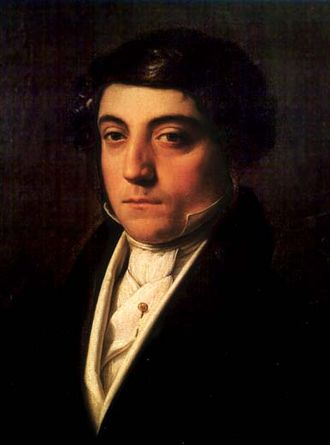
Portrait of Composer Gioachino Rossini
The following night all went perfectly, and the audience responded with cries for encores. When Rossini didn’t appear for the customary bows, they left the theater calling his name. Legend has it they marched to his hotel, where Rossini hid under the bed, convinced “My poor opera has been booed still more than yesterday, and they have come to give me a trouncing.”
Perhaps the most important reason for the opening-night failure was the pro-Paisiello claque, who had come to punish an upstart. As Rossini knew, his opera was competing with Giovanni Paisiello’s II Barbiere di Siviglia (1782). Though over thirty years old, it was considered the standard for II Barbiere. Fearing this, Rossini had written Paisiello to ask permission to set the same text and even chose a different title, Almaviva, ossia l’lnutile precauzione (Almaviva, or the Useless Precaution) to avoid any presumption. Though Paisiello raised no objection, his supporters were indignant at the upstart’s audacity. The rest is, as they say, history since today no one even remembers Paisiello, and Rossini remains opera’s most celebrated buffa composer.
The text of II Barbiere comes from the first part of Pierre Augustin Caron de Beaumarchais’ 1765 stage trilogy: Le Barbier de Séville, Le Mariage de Figaro and La Mère Coupable (The Guilty Wife). The first two parts were immediately turned into operas, and though there have been almost a dozen IlBarbiere operas, only Rossini’s is performed today. The reasons for this are obvious; first, the plot employs that favorite comic formula of young lovers, aided by a crafty servant, outwitting an old guardian and would-be lover; second, it abounds in melodic numbers, both comic and romantic; and third, it is full of hilarious buffoonery.
But the most important reason is that not since Mozart’s comedies had music been so expertly used to establish character. Could anyone but Figaro sing his “Largo”? Or anyone but the smarmy Basilio justify slander with “La calunnia è un venticello” (Calumny is a little breeze)? These musical numbers fix character more securely than any costuming or stage antics. Perhaps the best example of this musical genius is Rosina’s first coming to life in “Una voce poco fa,” and then her fuller revelation in “Io sono docile/Son rispettosa’ (I am docile/I am respectful), where she tells us she knows what she wants and how to get it!
Adelina Patti as Rosina in ‘The Barber of Seville’
In the 19th and early 20th century, Rosina’s second act music lesson aria was completely altered by divas who preferred to give their own, thereby ignoring the scene’s dramatic significance for Rosina.
American favorite Adelina Patti regularly substituted “Home, Sweet Home,” whereas Australian diva Nellie Melba preferred the mad scene from Donizetti’s Lucia di Lammermoor. Nineteenth century divas could not resist the singing lesson’s display possibilities, and their supporters encouraged them shamelessly.
With II Barbiere’s triumph, Rossini’s fortunes skyrocketed, making him the most celebrated opera composer of his time. Thirteen years and many successes later, he retired and spent his remaining forty years indulging his love of high living. Retiring at the pinnacle of fame was his last brilliant act, as he noted: “Retiring in time requires genius, too.”
by Gilbert R. Davis
Dr. Davis has contributed notes for Opera Grand Rapids’ productions for over 35 years.
“Leonardo Vordoni’s musical direction was faultless, the Italian conductor bringing lively tempos, idiomatic pacing, and attentive detailing… with scrupulous balancing of ensembles and chorus throughout.” – Chicago Classical Review
“The very enjoyable performance redounded to the credit of rising conductor Leonardo Vordoni, who jumped in with zero orchestral rehearsal and gave a cogent, lively account… Vordoni had coached the singers and the level of spoken and sung Italian was unusually precise and expressive, a key factor in this piece.” – Gay City News
“Conductor Leonardo Vordoni… interpreted the score as keenly with his heart as with his intellect.” – Opera News
“…masterful conducting by Leonardo Vordoni (making his Lyric début). Conductor Vordoni, showcased the teamwork in this great Mozart opera, meshing comedy and romance and achieving a sensitive balance between orchestra and singers.” – El Paso Times
“None of this would have been possible without a conductor who has a nuanced sense of comic timing. And that’s exactly what Opera Colorado found in emerging maestro Leonardo Vordoni, who was making his début with the company. He married suitably high-energy pacing with keen responsiveness to the action onstage.” – Opera News
What is your conducting style?
I can’t be very animated because I’m a tall guy and it would be too distracting. I always analyze the score, trying to understand what the composer deeply wanted. My approach is a coaching approach, not just ”we are in 4 and here we are in 3.” I always allow everybody to express themselves: it’s the most important thing to me. The audience sees my back not my face, meaning I’m there to serve the orchestra and the stage.
What work are you most proud of?
I’m very grateful that I’ve had a chance to share my idea and work with amazing musicians. I’ve been lucky to have the opportunity to craft and give interpretation to timeless masterpieces.
I’m proud of all the works I’ve done, otherwise I wouldn’t have done it. The most important thing is to touch some chord in the audience, and when you sense that through a performance, you achieve the goal.
When we work, we always give our best. Every night is opening night. If the audience is happy, then I’m happy: after all, we are in the entertainment business. Opera is a live performance, everything can happen and every time is different, so I can say that every show that I have done has a special meaning to me for different reasons.
Why do you do what you do?
In Italy, when I was a kid I found myself whistling some motif from some opera without knowing, just because it’s part of our culture. When I started working, I got warned “be careful, opera is like a drug—when you start you want more.
I love to coach singers. When I was in Italy as a pianist, I found myself backstage waving my arms and wondering about interpretation, and I was always attracted to the theatrical experience, not only the music: all the aspects. I always read every piece as a chamber music piece. It’s always a partnership in music making, teamwork, and that’s why I’ve always been involved in chamber music groups, and the operatic experience is the best chamber group you can put together with orchestra and singers.
Uzan’s 400 productions have graced the stages of one hundred opera companies in North America, France, Italy, Switzerland, Germany, and South America. He has also co-designed more than fifty productions.
Bernard Uzan, a native of France, is a graduate of the University of Paris where he earned doctorates in literature, theatrical studies, and philosophy. He began his career appearing throughout many prominent theaters throughout Europe as an actor and director. Along with his work as an actor and director, he was Professor of Literature, Acting, and Directing at Wellesley and Middlebury Colleges. From 1988 to 2002, Uzan served as General and Artistic Director for L’Opera de Montreal and in 2011 he started Uzan International Artists with his daughter, Vanessa Uzan.
We spoke with Barber of Seville Director Bernard Uzan to learn more about his remarkable background and talents coming to the Opera Grand Rapids stage.
Tell me about your extensive career as an Actor, Stage Director, Librettist, Educator, and many more accomplishments I’m not naming.
I started to be an actor and a director a long time ago. I had my debut as an actor in 1964. I was 20 years old. I was in Paris, and I did a lot of theatre plays at that time, and lots of voiceovers of actors of American films. I did “The Graduate,” “Serpico,” “Dog Day Afternoon,” and many others. Then, in 1971 in Paris, I was asked to go to Middlebury College to teach theatre because I was a Professor of Literature teaching students aged 25 to 40 who were pursuing their Masters and PhDs. There, we did a play, and the French counsel came to see the play and he asked me why I didn’t have a theatre company there, and why I don’t try it. In the fall of 1971, I started a French theatre company in Boston. We ended up touring all over the country for 10 years doing 90 to 100 performances a year in French.
In 1981, Sarah Caldwell was producing “Faust” with Neil Shicoff, Samuel Ramey, and Diana Soviero with the original dialogue. She knew me as a theatre director and asked if I wanted to direct the dialogue, but I had never been to an opera in my life. I went, and three days later she was not feeling good, and so she asked me to direct the entire opera. A lot of people came to see it, so I had a lot of contracts the following year because of it. I stopped the theatre because I had no time anymore, and I just did opera. Even five years later, in ‘86 or ’87, I was asked to become general director of Tulsa Opera, and a year later I was asked to become general director of Opéra de Montréal. I stayed in Montréal for 14 years.
Congratulations on your recent award for Lifetime Achievement from the Giulio Gari Foundation. How does it feel to win this award?
That’s a funny story I’m going to tell you. The same week I received this announcement for the lifetime achievement award, I knew the television series “Mozart in the Jungle” was looking for actors. I decided to audition, and I hadn’t been an actor for a long time. They gave me the part. I am in it, and I am part of the Emmy nomination for best “scene stealer.” I am achieved, and in the same week I go to an audition 44 years after my life as an actor. So, it was an extraordinary week. It was a great lesson of humility to go to the audition again. And the lifetime achievement is always a great honor.
Mozart in the Jungle. Bernard Uzan with Malcom McDowell
Tell me about the company that you established when you first immigrated to the States.
When I was in Boston, I created this company French Theater in Boston. Then, it developed very fast into French Theater in America. Two of my friends came from France to be part of the company. I had three to four living in Boston of French origin, or they were French teachers, so the French was absolutely impeccable and we were touring Molière, for example, all the time. We had a little van and a truck with sets going from city to city.
Once we did a play on a Saturday afternoon on Long Island, and we drove practically nine hours overnight to do a matinee on Sunday in Ann Arbor, Michigan. But, remember, I was 28 at the time, so that was possible. I was a director, I was driving the car, I was the administrator, I was picking up the programs at the end of the play so we didn’t spend too much money.
You’ve been involved with over 400 productions throughout your extensive career. What’s your favorite opera?
I don’t have a favorite. I think every time you direct an opera, even if you have done it very often, you have to find a way to be new in your approach and to be young again in the experience. So, I don’t have a favorite.
“(The) Rake’s Progress” I’ve never done and I hope I can do that before I’m in my grave. I wish I could direct “Lulu.” Sometimes, with my experience in classical repertoire, people don’t think of me for modern repertoire. I am a favorite for the big works, but they don’t necessarily think of me to direct “Lulu” or “(The) Rake’s Progress.” And I still have a French accent—thank god—and they think of me more for French repertoire, which is ridiculous. I come to mind especially with French or Italian opera. It’s too late; I’m not a kid anymore, maybe that is ingrained in their brains and not easy to change.
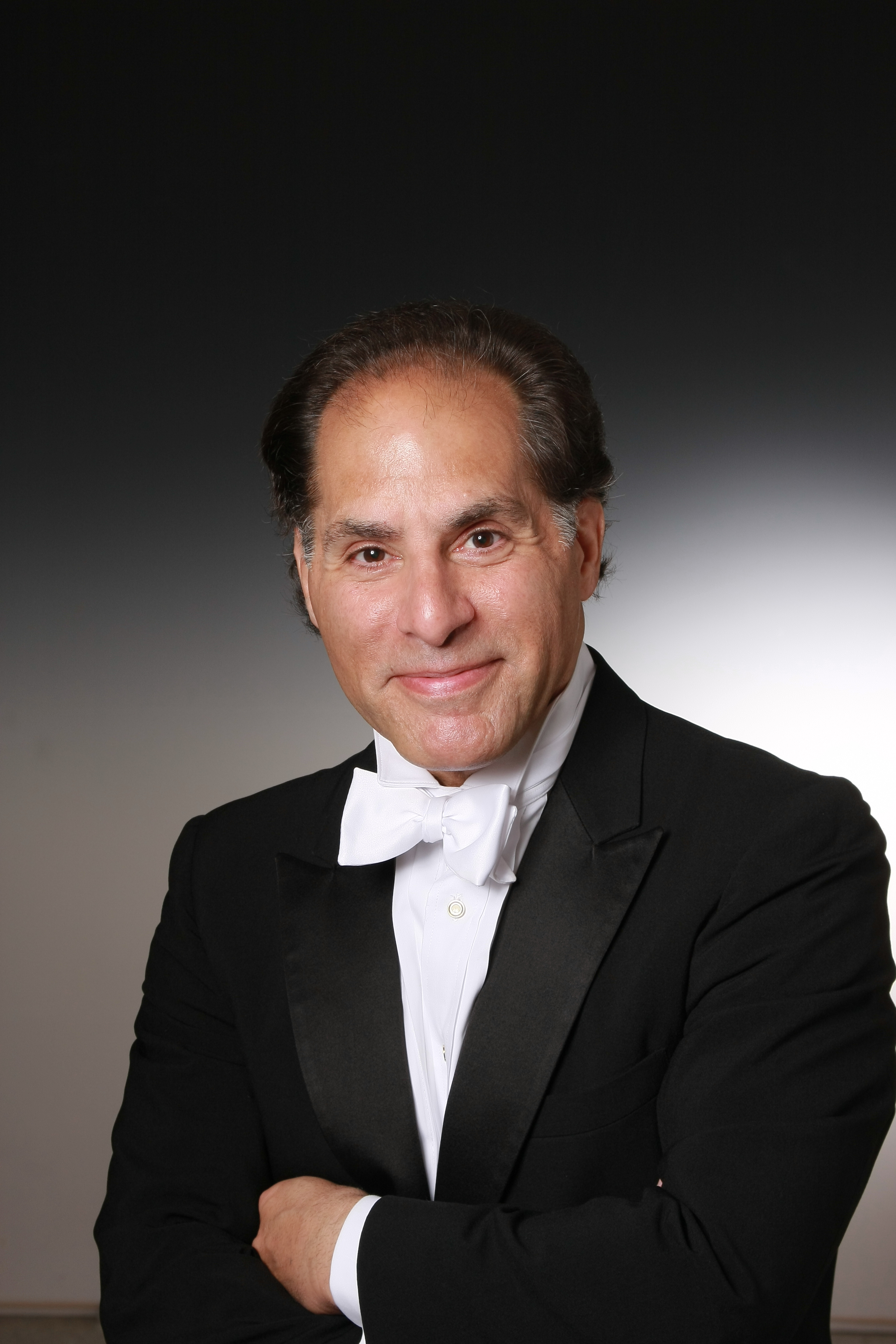
Opera Grand Rapids Artistic Director Maestro James Meena
Meet Opera Grand Rapids Artistic Director Maestro James Meena. In charge of programming and educational initiatives beginning in the 2017-2018 season—the same season Opera Grand Rapids celebrates its 50-year legacy— Mo. Meena’s duties include selecting repertoire, hiring guest artists and production teams, auditioning singers, and ensuring the artistic excellence of all Opera Grand Rapids’ productions and programs.
Maestro Meena joins Opera Grand Rapids succeeding the departure of Maestro Robert Lyall, former Artistic Director and Conductor for the company since 1989. The decision to appoint Meena follows the completion of a recent strategic study and focus on the creation of a new five-year roadmap for the company.
“Given his extensive expertise and proven accomplishments, Maestro Meena was a clear choice to fill our needs in the areas of artistic leadership with enhanced community engagement,” Opera Grand Rapids Board President Bob Evett said. “He will be instrumental in crafting and implementing our vision for the company.”
Revered for both his conducting and artistic vision, Mo. Meena consistently earns critical acclaim for his work at the podium. The breadth of his repertoire is represented by the works of Mozart, Beethoven, Puccini, Berlioz and Verdi. On opera stages, he has conducted legendary singers including Renée Fleming, Denyce Graves, James McCracken, Mignon Dunn, Marilyn Horne, Jerome Hines, Diana Soviero, Jerry Hadley, Mark Delavan and Marcello Giordani.
Throughout his career, Meena has been committed to ensuring visionary excellence and advancement of the cultural institutions he leads. Opera Grand Rapids General Director Anne Berquist predicts a period of renewed growth for the company as a result of his leadership.
“Maestro Meena is not only an exceptional leader, his artistic vision is unmatched. There is no doubt that he will usher in a new era of excellence and creativity for Opera Grand Rapids and be a wonderful addition to the Grand Rapids arts community at large,” Berquist said.
Maestro Meena’s duties include choosing repertoire, selecting guest artists and production teams, auditioning singers alongside Opera Grand Rapids Chorus Master Dr. Patrick Coyle, and ensuring artistic excellence of all Opera Grand Rapids’ productions and programs. Meena is also expected to have a central role in outreach and patron relations.
Grand Rapids audiences can expect to see Mo. Meena at the podium, among other guest conductors.
Since becoming General Director and Principal Conductor of Opera Carolina, Mo. Meena has demonstrated exceptional leadership, vision and finesse in the area of philanthropic development, having expanded the Opera Carolina season from three to four main-stage productions, as well as adding an annual Gala Benefit Concert. He expanded the Education touring company from eight-weeks to 17-weeks, and, in the face of government funding cutbacks, generated twice the requisite private sector funding needed. Since 2000, Opera Carolina’s budget has increased from $1.9 million to $3.5 million, and has posted positive fund balances in each of these years.
Opera Grand Rapids hopes to experience a similar growth from Maestro Meena’s leadership. Meena has already begun fervently mapping the course for the company’s upcoming seasons with much excitement.
“West Michigan is a wonderful area brimming with creative opportunity. My mind is a buzz with ideas for broadening opera’s footprint and impact on the community,” Meena said. “There is so much that can be done to excite the hearts and minds of those we engage, and I am thrilled to be working to set these plans in motion.”
Opera Grand Rapids will kick off its 50th anniversary mounting two large-scale productions at DeVos Performance Hall, a chamber opera at its home location, the Betty Van Andel Opera Center—featuring newly-installed theatre seating, a grandiose gala celebration, plus other activities. More details are to be announced this spring.
Beyond his leadership skills, Mo. Meena is a seasoned veteran at the podium. His conducting has been called “awe-inspiring” (Voix des Arts of Mo), “spot on” and “the best I’ve ever heard” (Opera Magazine).
Maestro Meena has been a frequent guest conductor with leading orchestras and opera companies in the United States, Italy, Taipei, Korea, Canada and Mexico, including the première of “Transit of Venus” by the Canadian team of composer Victor Davies and librettist Maureen Hunter, recorded for national broadcast on the CBC. His Opera Carolina performances of “Faust,” “Eugene Onegin,” and “Il trovatore” are captured on recording for “NPR World of Opera.”
His principal and resident conducting posts include Cleveland Ballet, Toledo Symphony, and Toledo Opera, and Associate Conductor for Pittsburgh Opera.
Other notable conducting appearances include the season-opening double bill of Rachmaninov’s Aleko and Leoncavallo’s Pagliacci for New York City Opera last fall, a nationally televised Thanksgiving concert for the Korean Broadcasting System Symphony; performances with the National Symphony Orchestra, Taiwan; concerts with the Cairo Symphony Orchestra in the new Cairo Opera House; and symphony concerts with the orchestra of the Teatro Massimo Bellini in Catania, the Orchestra Regionale Toscana in Italy.
Maestro Meena is a graduate of Carnegie Mellon University and Baldwin Wallace College Conservatory of Music. His principal conducting teachers include Thomas Mihalak (New Jersey Symphony), Robert Page (Cleveland Orchestra), Rudolph Fellner (Pittsburgh Opera), and Boris Halip (Bolshoi Ballet), with whom he also studied violin. Mo. Meena was awarded the Distinguished Alumni Award by his undergraduate alma mater in 1997 for his commitment to visionary excellence and growth of cultural institutions.

 Opera Grand Rapids has teamed up with Brewery Vivant to launch a beer celebrating the Opera’s upcoming production. Fermented with Biere de Garde yeast, the “Beer of Seville” is a Belgian dark amber brewed with Spanish orange peel. The beer features notes of caramel and raisin from the malt. Orange peel and Palisade hops lend a citrus flavor and aroma.