Whether you’re a veteran opera buff or a novice, chances are that you’ve heard the tenor showpiece “La donna è mobile.”
“La donna è mobile,” Rigoletto’s best-known aria, is featured in such diverse commercials as Leggo’s tomato sauce, a goofy Doritos Super Bowl ad where a baby is slingshotted through the air in an attempt to steal his brother’s chips, and a steamy Argentinean ad for Axe body spray. It was the score for a “Prince of Pizza” commercial in the Prairie Home Companion movie and was included in the soundtrack for the Grand Theft Auto computer game.
And that’s only a sampling.
Let us embark on a YouTube tour of Rigoletto’s famous aria “La donna è mobile,” shall we?
Doritos Commercials
Doritos used the famed aria as the soundtrack to not one, but two Super Bowl ads. Extending beyond the role of background music, the commercial takes place at the opera theater. In the second Doritos Super Bowl ad, a family feud takes place over a bag of chips.
AXE Commercial
In a soft rock adaptation of the Verdi aria, this AXE ad highlights the trials of romantic relationships… with a twist (and a happy ending).
Nestle Choco Crossies
For this Nestle commercial, the pleasure of cookie-sharing is amplified by the aria.
Leggo’s Tomato Paste
The art of music meets the culinary arts in this expressive commercial for tomato paste.
Scrubbing Bubbles Commercial
Singing bubbles replace opera tenors in this commercial jingle.
Other commercial uses of “La donna è mobile” include Olive Garden, the Sopranos television show, and many food commercials for frozen pizza, spaghetti, olive oil and pasta.
RIGOLETTO
by Giuseppe Verdi
Considered to be the birth of Italian grand opera and one of Verdi’s most memorable creations, Rigoletto is a heartrending journey of unrelenting force powered by one recognizable melody after another. Learn more about the upcoming production.
The classical arts have a special relationship to one another. In the world of grand opera, orchestration, song, dance and theatre all come together to create the final larger-than-life product. Take, for example, Opera Grand Rapids 2007 production of Carmen, which featured both the Grand Rapids Ballet on the stage and the Grand Rapids Symphony in the orchestra pit.
When marrying art forms, there are limitless creative possibilities. In combination, we create experiences that are richer than each independent art form.
On June 8, members of Grand Rapids Ballet join forces with Opera Grand Rapids’ Emerging Artists to share a unique coming together of art forms. Opera Fusion–a performance featuring a juxtaposition of operatic vocals, popular music, and unconventional orchestrations–includes elements of opera, visual art and dance.
Dale Schriemer, Opera Grand Rapids Emerging Artists Program Director, says that the element of dance in the performance will help to bring to life the narrative behind the music.
“What is suggested in the music and lyrics is realized visually by Yuka Oba’s choreography. We see the intense human drama where life and death meet.”
Providing choreography for the performance is Grand Rapids Ballet dancer Yuka Oba, a member of the company since 2011. Developing the choreography alongside the music was a new challenge for her.
“It was very interesting and challenging to build choreography around the opera music. When I choreograph a piece based on music, I usually choreograph dance movements that look like the dancer is playing the instrument, and for the parts where the singer’s voice is the strongest, I choose to choreograph simpler movement. Because opera already has such a strong expressive power, I realized that the dancer and singer each have an important, independent role to play—this is where the balance between the two becomes the magic of the piece.”
Other company dancers from Grand Rapids Ballet performing are Micaelina Ritschl, Connie Flachs, Clare Schellenberg, and Steven Houser.
Members of the Grand Rapids Ballet rehearse for “Opera Fusion”
Opera Fusion will feature Opera Grand Rapids’ talented young artists juxtaposing traditional arias with different musical genres. In addition to performances of your favorite opera arias, fresh operatic vocals will mash with popular songs to create surprisingly beautiful sounds. Tickets to Opera Fusion are now sale now through Ticketmaster or the Opera Grand Rapids Box Office, 616.451.2741. Learn more about Opera Fusion.
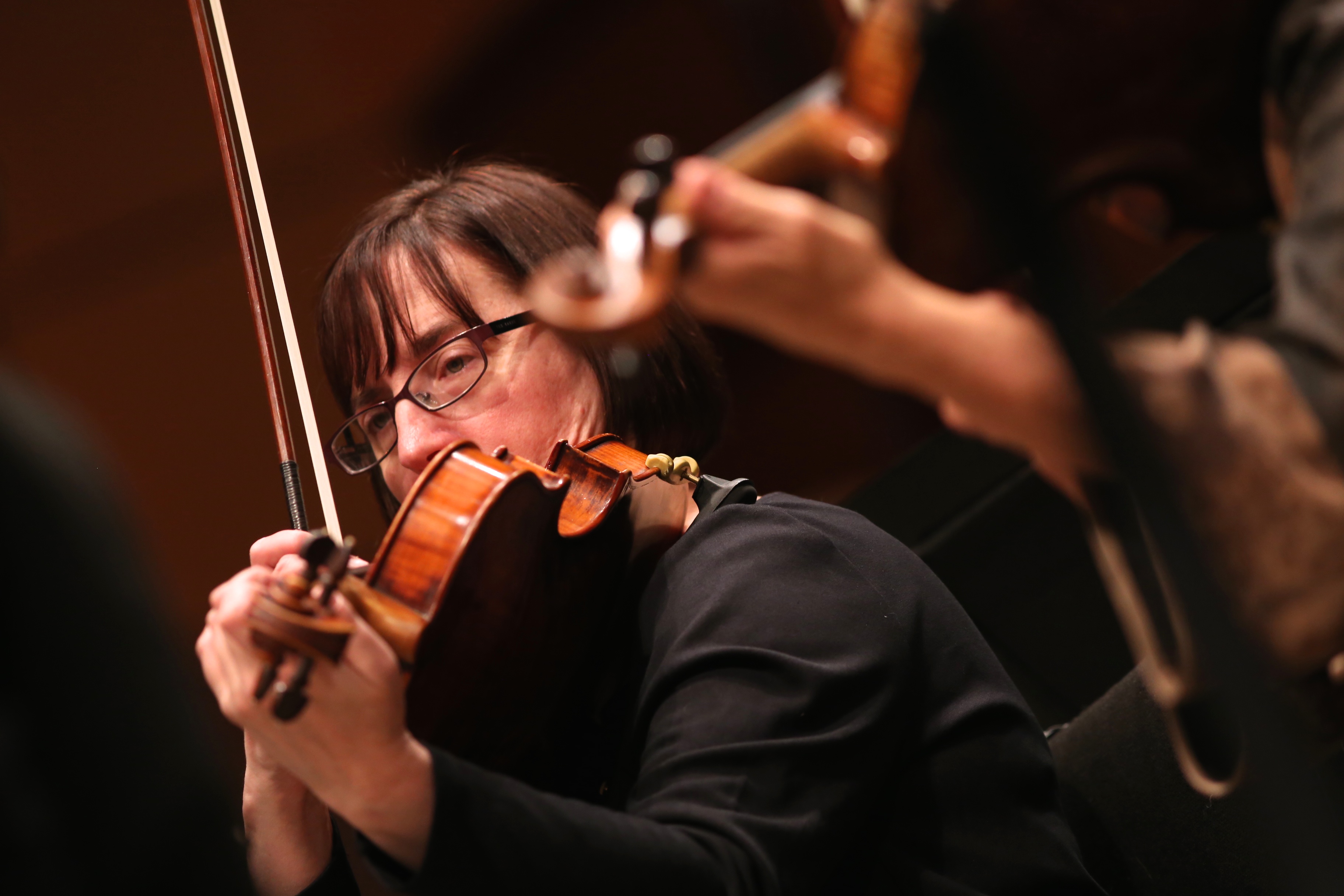
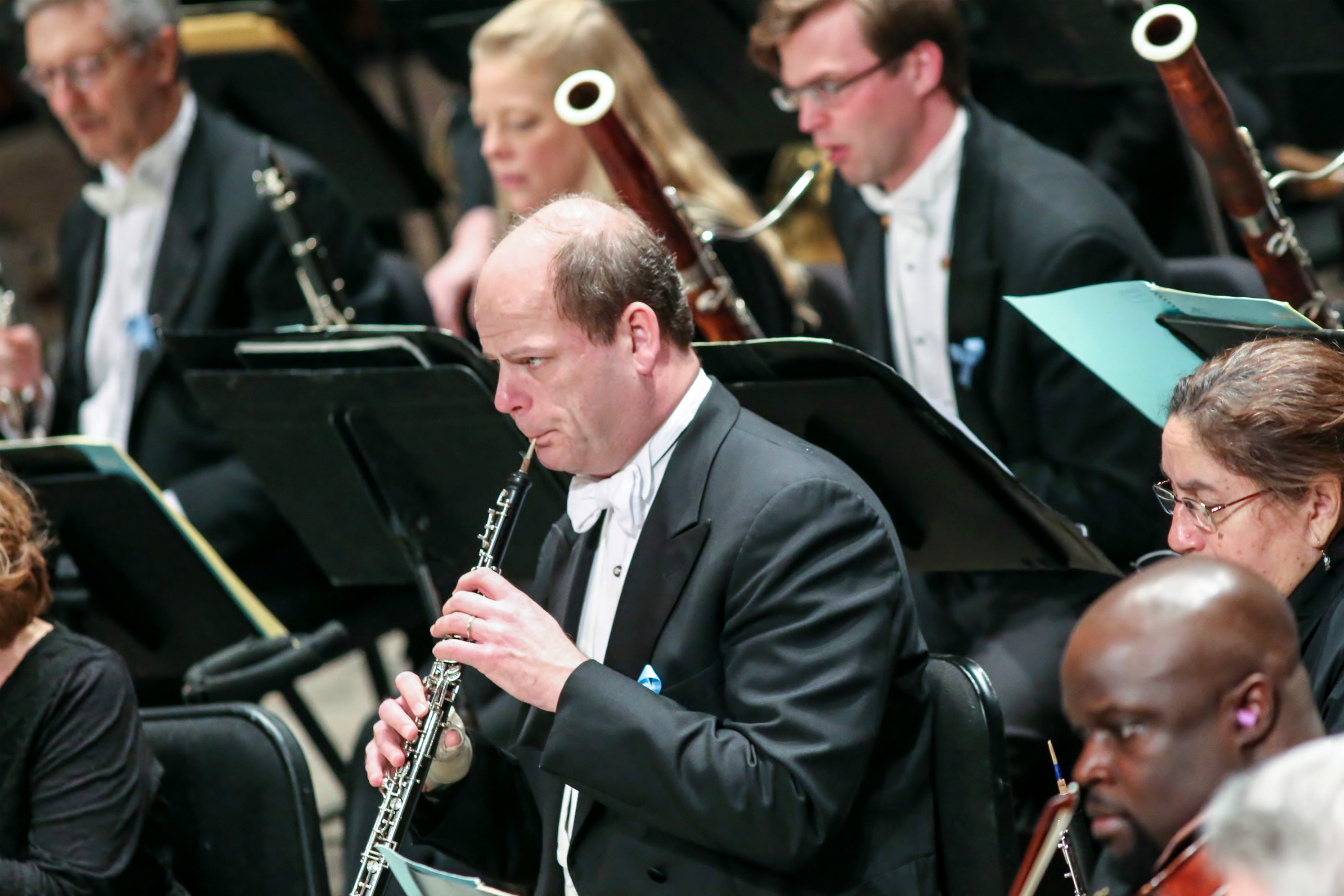
When most people think of opera, they think of the singers on the stage. However, in an opera, the orchestra plays an equally important role. Grand Rapids Symphony musicians Barbara Corbató, Assistant Principal Viola, and Alexander Miller, Assistant Principal Oboe, understand this well.
“The orchestra and voices on stage are so dependent on each other. As artists, we all have a great love of and dedication to the art form,”Corbató said.
Barbara Corbató; Photo: Terry Johnston | Grand Rapids Symphony
Miller, who played his first opera at The Metropolitan Opera while attending The Julliard School in New York City, enjoys the extra element of musical storytelling and action on the stage that the opera offers. “I wouldn’t ever want to play in an orchestra that never got to do an opera.”
An opera production requires that the orchestra musicians approach each performance differently than they would a symphonic concert.
“Playing an opera is like running a marathon in terms of focus and physical endurance. When an act begins, we are completely focused until each act ends, sometimes up to ninety minutes later. And then after intermission, we come back to do it again,” Corbató said. “On opera days, I have to plan my day so that I don’t over practice or play too much so that I have good endurance for the rehearsal or performance.”
For Miller, the ability to use abstract thinking is important when playing in the pit. Because the musicians cannot directly see what’s happening on the stage, they rely on the conductor to guide them. “You’re not going to be able to sit down and know exactly what’s happening in every bar, just because there’s so much dealing with the action on the stage.”
Collectively, Miller and Corbató have over 50 years of experience performing with Opera Grand Rapids as part of the Grand Rapids Symphony. Through the years, they have racked up some entertaining stories. Perhaps the best story is how Miller began his career performing in opera.
Alexander Miller; Photo: Terry Johnston | Grand Rapids Symphony
“The very first time I got to play at The Met, it was a very last minute substitute, like eight minutes before curtain,” said Miller.
The slotted oboist was stuck in traffic on the Holland Tunnel. After being asked the question “How fast can you get in a tuxedo,” Miller found himself buttoning his shirt in the elevator and sprinting into the pit.
“The first thing was an oboe entrance in the overture to Mozart’s The Marriage of Figaro. I played the entire first act before the second oboist arrived. What a crazy way to make an entrance!”
Corbató’s best memory wasn’t from the pit, but rather from the stage at Opera Grand Rapids’ 1996 production of Rigoletto.
“One of the fun times that I had, I think it was Rigoletto, I did the onstage string quartet. We had to play up to a certain point in the pit and then race up to the stage to get in place to play on stage, getting on stage in time and then getting back down to the pit to play. We were in quite in a hurry. It was really fun to play on stage with the set.”
About Barbara Corbató
Barbara Corbató is currently Assistant Principal Viola of the Grand Rapids Symphony, where she has performed since 1990 and is also a member of the GRS’ Calder String Quintet. In addition, she is an active chamber musician- a member of the Perugino String Quartet since 2007, and performing regularly at the Chamber Music Festival of Saugatuck. Ms. Corbató also is active as a viola teacher, serving on the viola faculties at Hope College while also maintaining a home studio. She also has taught viola at Aquinas and Calvin College.
Ms. Corbató grew up in Columbus, Ohio, then attended the University of Michigan, where she received Bachelor and Master of Music degrees in Viola Performance. Before moving to Grand Rapids, she performed in the New World Symphony of Miami, Florida, the Spoleto Festival of South Carolina and Italy, and the orchestras of Columbus, Flint, and Saginaw. She has also participated in music festivals in Santa Barbara and Aspen.
About Alexander Miller
Alexander Miller, who splits his time equally between composing and performing on oboe, has written many large orchestral works including “Fireworks,” performed in Carnegie Hall for the Grand Rapids Symphony’s 75th anniversary, “Let Freedom Ring,” which has been narrated by James Earl Jones, Danny Glover and former president Bill Clinton, “Encaustic,” a clarinet concerto depicting wax painting, “Madame Bovary,” a cello concerto inspired by Flaubert’s impossible dreamer, and his recent “Rocomoji,” a modern concerto grosso that takes a serious look at the emoji phenomenon.
His music has been hailed as “stunning” (American Harp Society), “otherworldly” (Tacoma News Tribune), “engaging and energetic” (Modesto News), and anything from “magnificent,” “haunting” and “imaginative” to “intricate” and “sly and whimsical” (Grand Rapids Press). About his orchestral tone puzzle “Scherzo Crypto,” a senior critic at the San Antonio Express-News wrote that his “vibrant, propulsive” music “recalled in some ways the best mid-20th century American symphonists.” When he was a resident composer at the 2016 Cabrillo Music Festival with Marin Alsop, artssf.com called him “clever, unique – a composer with something of Alan Turing within him.” Arts and Culture Texas Magazine delivered a rave review of the world premiere of “Rocomoji,” calling it “brilliant … you have to hear it to believe it. Miller’s writing is deliciously evocative, imaginative, and humorous.” Most of his commissions and premieres have originated in Grand Rapids, where the Grand Rapids Press has called him “Assistant Principal Oboist by title, Composer-in-Residence by default.”
Miller was born in Bloomfield Hills, Michigan in 1968 to an art-loving mother and an auto executive father, then spent his childhood living in Mexico, Australia and Venezuela before returning to Michigan for high school. He completed his musical training at The Juilliard School in New York and holds B.M. and M.M. degrees in oboe performance. Shortly after graduating in 1992, he won the national audition for Assistant Principal Oboe with the Grand Rapids Symphony.
In addition to his orchestral duties, Miller is an oboist, conductor and composer with Ensemble Montage, a chamber group dedicated to performing the myriad challenging works of the past century. He also plays with the Wünderwind Quintet and travels to elementary schools to teach children about the basic elements of building music.
In 2009, Miller received the diagnosis of a rare recurring brain tumor that forced him to undergo two brain surgeries followed by a long rehabilitation. Working his way back to a life of performing and composing is his proudest accomplishment, and he blogs about his experiences as a patient regularly, stressing the importance of humor and honesty as a path to healing. He is married to Grand Rapids Symphony violist Mary Jane Miller and they enjoy life together with their poodle, JoJo. His other interests include mushroom hunting, puzzles, modern art, aviation, and wine.
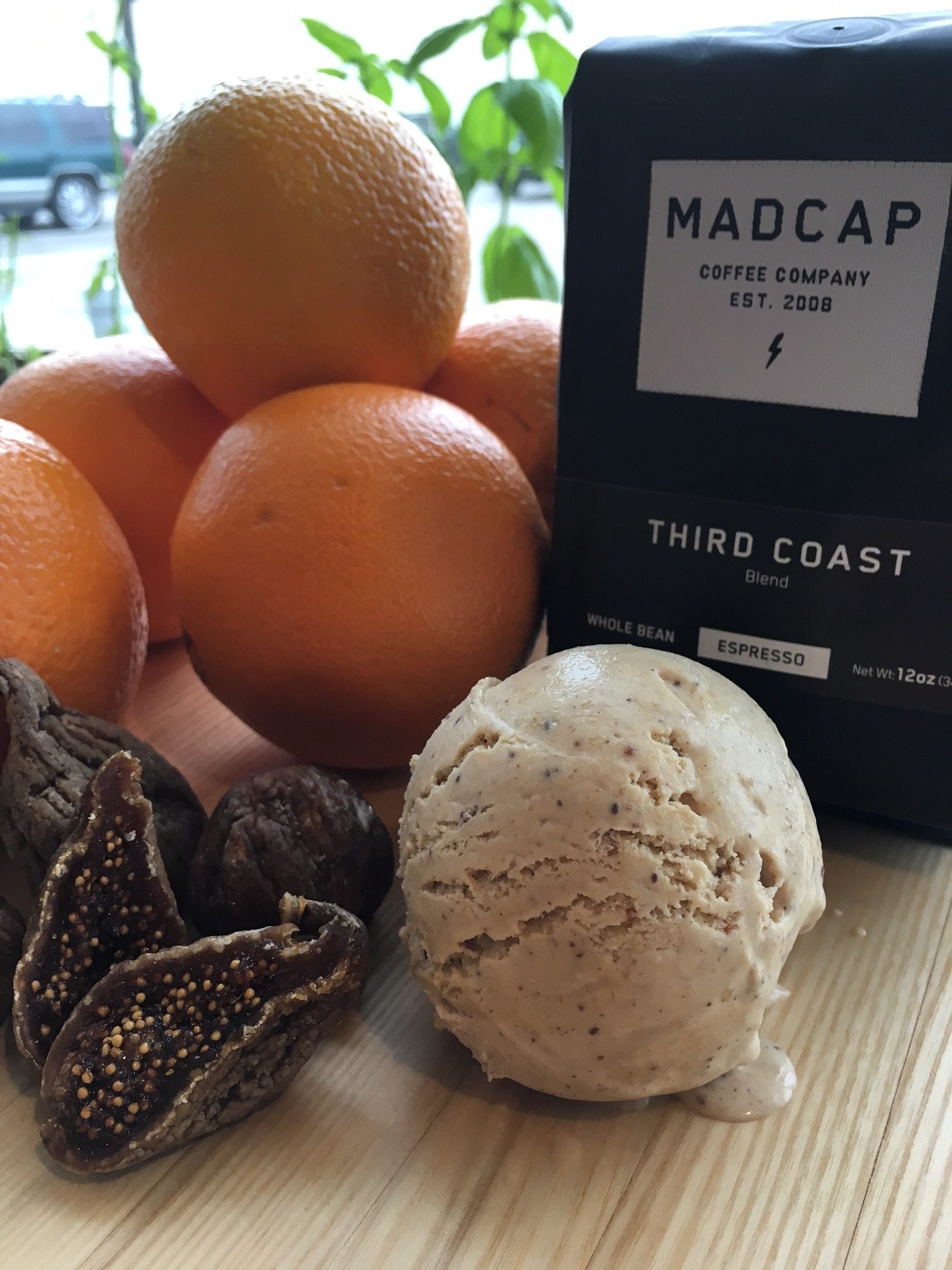
Opera Grand Rapids teams up with Love’s Ice Cream (yet again) to unveil a new ice cream flavor in celebration of Opera Grand Rapids’ upcoming production of The Barber of Seville.
Inspired by The Barber of Seville’s title character–the ever-wacky, madcap barber, Figaro–the flavor features Madcap coffee ice cream swirled with a Seville orange and Fig jam. Meet the Madcap Figaro!, available for a limited time only at the Love’s Ice Cream store in the Downtown Market. The specialty flavor is available from now until May 13. Don’t miss your chance to get a taste!
For more information on Love’s Ice Cream, visit lovesicecream.com.
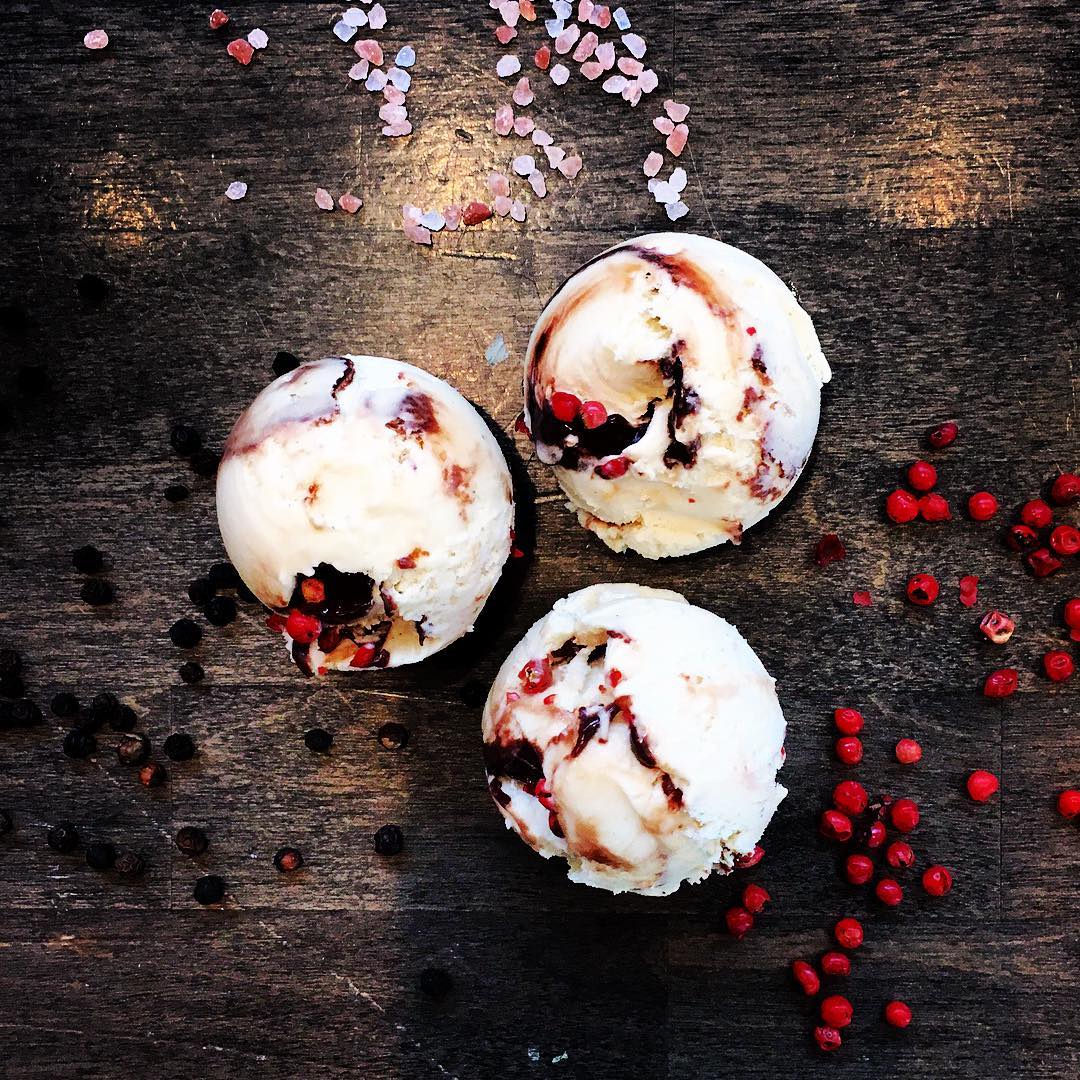
Opera Grand Rapids and Love’s Ice Cream began partnering in 2014 to bring you specialty ice cream flavors in honor of each opera production. Take a look back at the previous creations below!
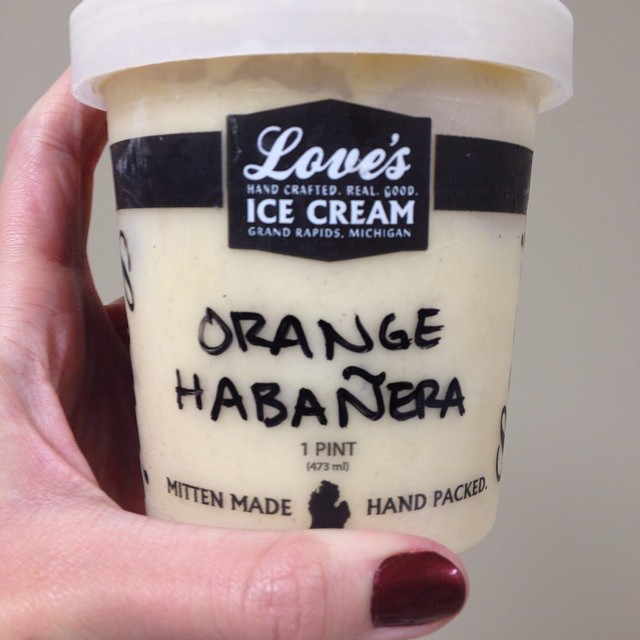
A healthy extra dark chocolate flavor “The Darkest Depths of Hellth” for Orpheus and Eurydice.Contrasting ingredients meet in “Fortune’s Fool” flavor inspired by Romeo and Juliet.The Student Prince tenor Justin John Moniz tastes “Three Golden Apples” ice cream flavor.Spicy yet sweet, “Orange Habanera” inspired by Georges Bizet’s Carmen“Red Light Tango-rine” flavor for Astor Piazolla’s Maria de Buenos Aires.
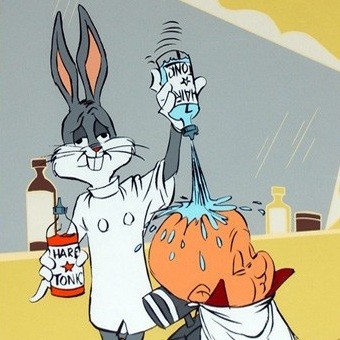
It’s no surprise that Rabbit of Seville, a Warner Bros. Looney Tunes theatrical cartoon short released in 1950, was voted #12 of the 50 Greatest Cartoons of all time by members of the animation field.
Director Chuck Jones and writer Michael Maltese draw on Rossini’s opera The Barber of Seville for inspiration, playing six minutes of Rossini’s opera while Bugs Bunny and Elmer Fudd battle onstage at the Hollywood Bowl, occasionally even singing along. The constant onscreen gags are punctuated mostly by Rossini’s famous overture, “Largo al factotum.”
The musical arrangement is remarkable in that the overture’s basic structure is kept relatively intact; some repeated passages are removed and the overall piece is conducted at a faster tempo to accommodate the cartoon’s standard running length.
The cartoon opens with people filing in to see The Barber of Seville in an amphitheater. In the back of the theater, Bugs is chased by Elmer, who is shooting his gun, and runs through an open stage door. Elmer, now on stage behind the curtain, does not see it rise when Bugs raises the curtain. The conductor, after a brief confused look at his watch, shrugs, then starts the orchestra, which causes Elmer to turn wide-eyed towards the audience. Bugs then steps out from behind the door of a stage barber shop, dressed in a barber’s outfit, and forces Elmer into getting a shave, rendering him “nice and clean, although [his] face looks like it might have gone through a machine.”