
News

A History of Opera in Grand Rapids


This story is part of a series of 50 stories we are releasing to commemorate 50 years of opera in West Michigan. Browse more stories and follow our journey throughout the season.


On opening night, The Grand Rapids Press editorialized that the appearance of the Met was “an acknowledgment of [Grand Rapids’] importance as a musical center and as a leader in cultural affairs.”

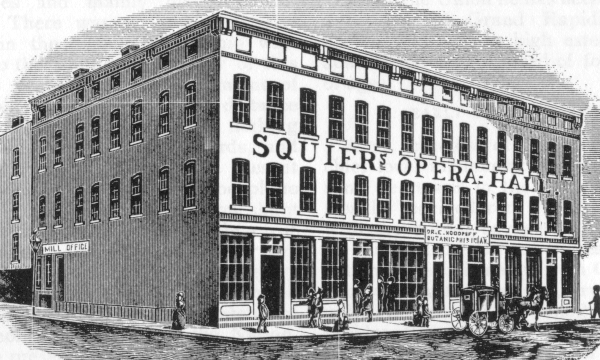
Opera in Grand Rapids began one Tuesday evening in September 1868, in Squire’s Opera House, where the Grau Opera Company presented Flotow’s Martha complete with orchestra and chorus. Announcing this important event in the cultural life of the city, the editor of The Eagle pled for a large attendance to “disabuse the public mind of an idea somewhat prevalent, that nothing but Negro minstrels and similar performances can be well patronized. The evening was an outstanding success, the opera “admirably presented to a full, appreciative and delighted audience,” and the Grau Company no less delighted–responded with a matinee encore of Auber’s Fra Diavalo. Though neither of these Victorian favorites is much seen these days, opera took root in Grand Rapids, producing results both curious and exciting. Within a year, high-spirited local performers presented Julius Eichberg’s now forgotten, The Doctor of Alcantara. The production, entirely in the hands of local amateurs, was an unqualified success, and even a June storm was unable to dampen the audience’s enthusiasm. Everyone, The Eagle reported, was “very amply repaid by the excellence of the performance.” The troupe, accompanied by over a hundred well wishers, took the show of the road, where Kalamazoo audiences greeted them with equal enthusiasm. Clearly, it was the musical (and social) event of the season. That no further efforts followed from this group must have been a grave disappointment, indeed.

But several years later, Professor Jaroslav Zielinski, a Polish émigré temporarily settled here, returned locally produced opera to Grand Rapids. Zielinski, whose excellent musical training and artistic tastes are evident in the reputation he enjoyed while living here, twice directed local amateurs in ambitious undertakings: in 1876, it was Bellini’s La Sonnambula, and in 1878, Thomas’ Mignon. Though Zielinski coached his troupe for months, Bellini proved too taxing for local voices. Mindful of the performers’ amateur status, The Eagle generously praised them, while concluding, “we think [Professor Zielinski] was too ambitious” in his choice of operas. Mignon, however, was just right for local voices, and the future of locally-produced opera looked bright. But Zielinski’s decision to go West ended all that.

Yet, this brief flirtation with local opera was the beginning of a decade in which opera came to Grand Rapids in a big way. During those years all the major impresarios–Grau, Holman, Strakosh, Gorman and Emma Abbott–brought their troupes to town. With them came opera light and heavy, sung by the competent and incompetent alike. Among the best known operas seen were Gounod’s Faust, Verdi’s La Traviata, Il Trovatore, and Un Ballo in Maschera which was actually the first Verdi opera heard in Grand Rapids! –Donizetti’s Lucia di Lammermoor and Linda di Chamounix. There were also several productions of Balfe’s Bohemian Girl and Planquette’s Chimes of Normandy, two chestnuts of a by gone age. In addition, the companies brought assorted operettas to lighten the season. And, of course, the Gilbert and Sullivan fever of the 1880’s did not spare Grand Rapids.

The performers who trouped through town during this busy decade make up a long list of the forgettable; but there were some memorable stars in the lot. The most famous–Clara Louise Kellogg and Minnie Hauk–appeared in concert operas, with neither sets nor staging. Miss Kellogg, who usually toured with her own company, sang a concert Il Trovatore, much to the disappointment of The Eagle reviewer, but not so for her small, enthusiastic audience. Miss Hauk brought Grand Rapids its first Carmen–her most celebrated role–but press accounts read more like a social than a musical event. The Penn Club, site of the after-theater party, was packed with everyone of standing in 1883 Grand Rapids society. All were anxious to meet not only the celebrated Miss Hauk, but also her husband, the Baron von Hesse-Wartegg, an Austrian nobleman of international fame.

Emma Abbott

But it was the Midwest’s own Emma Abbott who sparked the most enthusiasm during her six seasons here. Her Grand Opera Company introduced local audiences to Donizetti’s two ill-fated women (the mad Lucia and Linda of Chamounix), as well as Verdi’s Violetta, a role she was reluctant to sing because, she feared, “it would glorify fallen women.” Miss Abbott starred in most of her Company’s productions, but even on nights off she appeared at intermission to enthrall everyone with her “Last Rose of Summer,” “Swanee River,” and “Home Sweet Home.” She was America’s favorite songstress, and her Company always packed the Powers Opera House.

The next surge of opera activity in Grand Rapids came just after the turn of the century. In quick succession, Pietro Mascagni and Ruggero Leoncavallo, composers of those eternal twins, Cavalleria Rusticana and Pagliacci, each brought his alleged “La Scala” opera company to town. These were dazzling appearances, two internationally-famed composers conducting their own operas in concert performances. Audiences loved them, especially the flamboyant Mascagni, who entertained on and off the stage.

Operatically, the most interesting productions of the early years of this century were Wagner’s Lohengrin and Tannhäuser, both done in English by Henry Savage’s Grand English Opera Company. These two represent the only time Wagner’s operas were sung locally until Opera Grand Rapids’ 1989 production of The Flying Dutchman. Savage’s Opera Company played to capacity houses, and were warmly praised, reviewers concluding Grand Rapids was ready for both Wagner and top-notch performances. In the words of the Grand Rapids Press, “may Grand Rapids never be without its annual season of grand opera, and, if possible, Mr. Savage’s grand opera.”

Though the wish remained unfulfilled, the Savage Company did return a few years later with Puccini’s Madame Butterfly. This 1907 appearance was especially significant since it took place just after Butterfly’s American premiere, and Savage brought the original cast: Joseph Sheehan, Elza Szamosy and Walter Rothwell to conduct. It was a smash hit, easily making up for Savage’s four-year absence. The next year the New English Opera Company brought another Madame Butterfly, but this time The Daily News headline sadly reported: “Magnificent Production Poorly Attended.”

Other impresarios, however, were not discouraged with opera prospects in Grand Rapids. In quick succession, the Aborn Grand Opera Company made two separate appearances, even bringing another Butterfly. The following year Joseph Sheehan, star of the 1907 Butterfly, returned in 1912, with his own company for a season of Carmen, Bohemian Girl, and Martha. All were modest successes, but in 1916, overflow audiences greeted the Boston Grand Opera Company’s La Bohème, starring the Met’s own Maggie Teyte. The second half of this curious program featured Anna Pavlova and her Imperial Ballet Russe. An evening of a full-length opera followed by a complete ballet seems strange to modern audiences, but such mixed productions were then not unusual at all.

The following year, the Boston Company returned with two Met stars–Maggie Teyte and Riccardo Martin–in a Faust production that was, by all reports, magnificently sung. But a train accident cost the group its final act Walpurgis Night and both music and ballet had to be abandoned. In addition, the mishap forced the company to use La Bohème sets for the Act III outdoor scenes. All this the audience took in good spirits, and the Grand Rapids Press critic pronounced the Faust brilliantly presented.

For the next fifty years, opera in Grand Rapids fell on hard times. In 1923, Fortune Gallo’s San Carlo Opera Company tried a season, bringing back Madame Butterfly and La Bohème, while introducing local audiences to their first staged versions of those inevitable twins, Cavalleria Rusticana and Pagliacci. But this auspicious try was short lived as audiences were simply too small. Even the valiant efforts of an impressive list of local sponsors could not rescue opera for Grand Rapids during the twenties and early thirties. Clearly, the effects of motion pictures were being felt everywhere in the entertainment world.

But the San Carlo company returned in 1938, bringing with them a block-busting Aida, which played to 5,000 at the Civic.  Even the original Italian didn’t put the audience off, and for two more seasons the San Carlo brought Grand Rapids opera at its grandest and most glittering. Playing to full houses, opera seemed here to stay, but the outbreak of World War II ended all that.

In the years after the war, the Grand Rapids Symphony presented a series of annual opera concerts, with performers mainly from the New York City Opera Company. During these years, Maestro Desire Defauw scheduled Grand Rapids’ first Mozart and Richard Strauss operas! The 1958 Rosenkavalier starred Phyllis Curtin and Frances Bible, but sadly deleted all the male voices. For the 1957 Cosí Fan Tutte, Defauw employed a narrator, presumably to tie together the loose ends of Mozart’s opera. During these post-war years, Grand Rapids did see two fully staged operas, the first a New York Civic Opera production of Carmen. The cast consisted of talented, but largely unknown singers who were warmly praised by Press reviewer Gerald Elliot. Perhaps it was most fitting that the last touring company to bring opera to Grand Rapids was the Metropolitan. On December 12, 1951, the Met performed Johann Strauss’ Die Fledermaus before a packed Civic house. The traveling company, led by Brenda Lewis, was youthful and talented, prompting local reviewers to praise both the singing and acting. In addition, the sets and costumes were singled out as “magnificent.” On opening night, The Grand Rapids Press editorialized that the appearance of the Met was “an acknowledgment of [Grand Rapids’] importance as a musical center and as a leader in cultural affairs.” A proud boast that took a few more years to fulfill. But in 1966, opera returned to Grand Rapids for good, when The Opera Company of Western Michigan (as Opera Grand Rapids was first known) brought fully staged productions back to town. We can be thankful that for fifty years Opera Grand Rapids has presented us with outstanding productions, with ever-increasing skill and achievement, finally fulfilling the Grand Rapids Press’ proud boast.

by Gilbert R. Davis (originally published in 2007 by the Grand Rapids Historical Commission)

Dr. Davis has contributed notes for Opera Grand Rapids’ productions for over 35 years.

OUR FOUNDERS HAD A BOLD PROPOSITION: to build a professional opera company that would put Grand Rapids on the map for a very discerning audience. 50 years later, we are humbled to be the modern bearers of classical standards and modern ingenuity. Learn more.


SUPPORT OUR NEXT 50 YEARS

As an integral part of our city’s artistic fabric, it’s our responsibility to see to its continual flourishing. Please consider donating to Opera Grand Rapids to ensure our artistic excellence for the next 50 years and beyond. You’ve already made us great. With your support, there’s no limits to the height our voices can reach together. Give today.

The Commercial Domination of ‘La donna è mobile’

Whether you’re a veteran opera buff or a novice, chances are that you’ve heard the tenor showpiece “La donna è mobile.”

“La donna è mobile,” Rigoletto’s best-known aria, is featured in such diverse commercials as Leggo’s tomato sauce, a goofy Doritos Super Bowl ad where a baby is slingshotted through the air in an attempt to steal his brother’s chips, and a steamy Argentinean ad for Axe body spray. It was the score for a “Prince of Pizza” commercial in the Prairie Home Companion movie and was included in the soundtrack for the Grand Theft Auto computer game.

And that’s only a sampling.

Let us embark on a YouTube tour of Rigoletto’s famous aria “La donna è mobile,” shall we?

Doritos Commercials

Doritos used the famed aria as the soundtrack to not one, but two Super Bowl ads. Extending beyond the role of background music, the commercial takes place at the opera theater. In the second Doritos Super Bowl ad, a family feud takes place over a bag of chips.

AXE Commercial

In a soft rock adaptation of the Verdi aria, this AXE ad highlights the trials of romantic relationships… with a twist (and a happy ending).

Nestle Choco Crossies

For this Nestle commercial, the pleasure of cookie-sharing is amplified by the aria.

Leggo’s Tomato Paste

The art of music meets the culinary arts in this expressive commercial for tomato paste.

Scrubbing Bubbles Commercial

Singing bubbles replace opera tenors in this commercial jingle.


Other commercial uses of “La donna è mobile”  include Olive Garden, the Sopranos television show, and many food commercials for frozen pizza, spaghetti, olive oil and pasta.


RIGOLETTO

by Giuseppe Verdi

Considered to be the birth of Italian grand opera and one of Verdi’s most memorable creations, Rigoletto is a heartrending journey of unrelenting force powered by one recognizable melody after another. Learn more about the upcoming production.

Song & Dance: An Opera GR and GR Ballet Collaboration

The classical arts have a special relationship to one another. In the world of grand opera, orchestration, song, dance and theatre all come together to create the final larger-than-life product. Take, for example, Opera Grand Rapids 2007 production of Carmen, which featured both the Grand Rapids Ballet on the stage and the Grand Rapids Symphony in the orchestra pit.

When marrying art forms, there are limitless creative possibilities. In combination, we create experiences that are richer than each independent art form.

On June 8, members of Grand Rapids Ballet join forces with Opera Grand Rapids’ Emerging Artists to share a unique coming together of art forms. Opera Fusion–a performance featuring a juxtaposition of operatic vocals, popular music, and unconventional orchestrations–includes elements of opera, visual art and dance.

Dale Schriemer, Opera Grand Rapids Emerging Artists Program Director, says that the element of dance in the performance will help to bring to life the narrative behind the music.

“What is suggested in the music and lyrics is realized visually by Yuka Oba’s choreography. We see the intense human drama where life and death meet.”

Providing choreography for the performance is Grand Rapids Ballet dancer Yuka Oba, a member of the company since 2011. Developing the choreography alongside the music was a new challenge for her.

“It was very interesting and challenging to build choreography around the opera music. When I choreograph a piece based on music, I usually choreograph dance movements that look like the dancer is playing the instrument, and for the parts where the singer’s voice is the strongest, I choose to choreograph simpler movement. Because opera already has such a strong expressive power, I realized that the dancer and singer each have an important, independent role to play—this is where the balance between the two becomes the magic of the piece.”

Other company dancers from Grand Rapids Ballet performing are Micaelina Ritschl, Connie Flachs, Clare Schellenberg, and Steven Houser.

Members of the Grand Rapids Ballet rehearse for “Opera Fusion”

Opera Fusion will feature Opera Grand Rapids’ talented young artists juxtaposing traditional arias with different musical genres. In addition to performances of your favorite opera arias, fresh operatic vocals will mash with popular songs to create surprisingly beautiful sounds. Tickets to Opera Fusion are now sale now through Ticketmaster or the Opera Grand Rapids Box Office, 616.451.2741. Learn more about Opera Fusion.

Opera from the orchestra pit

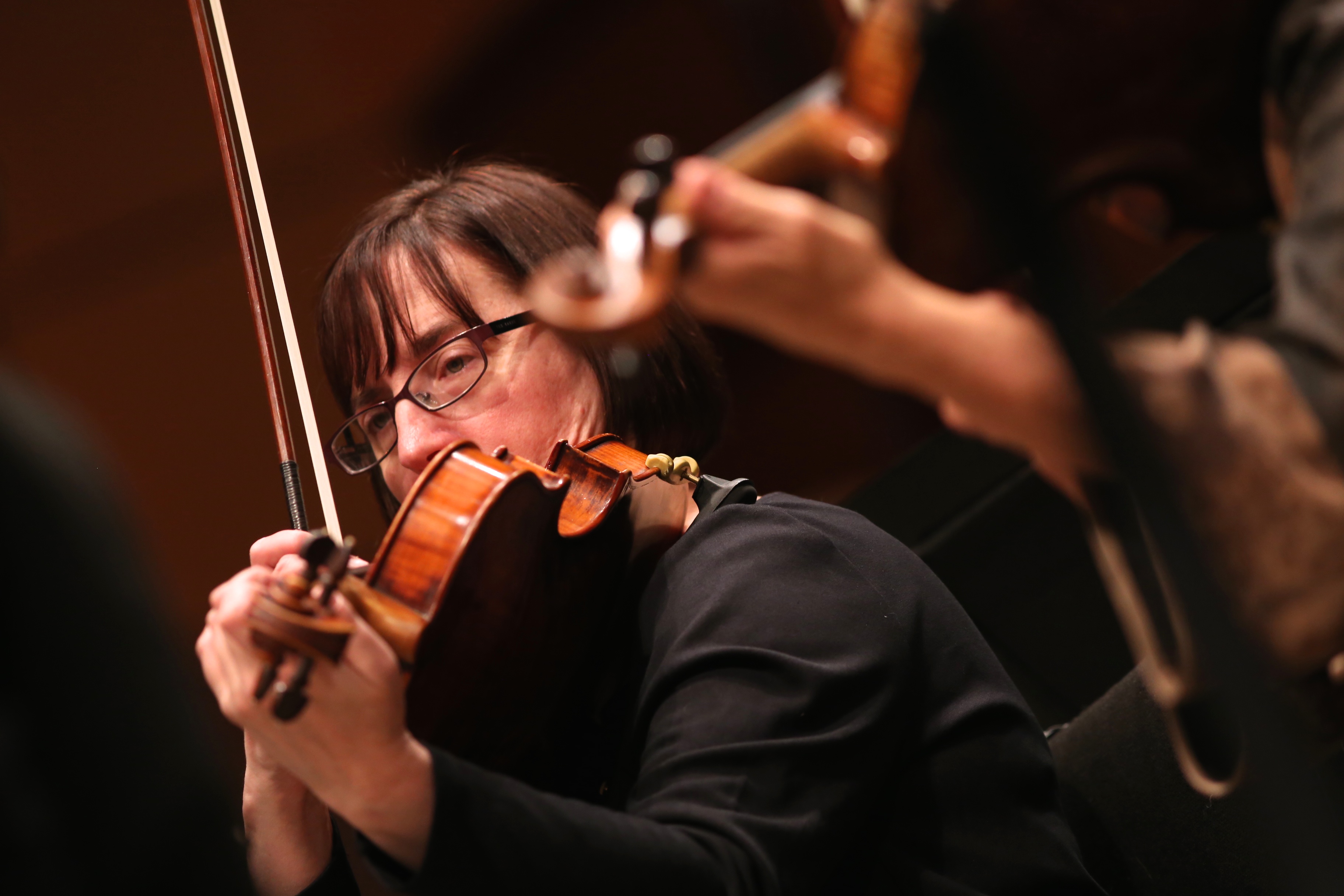
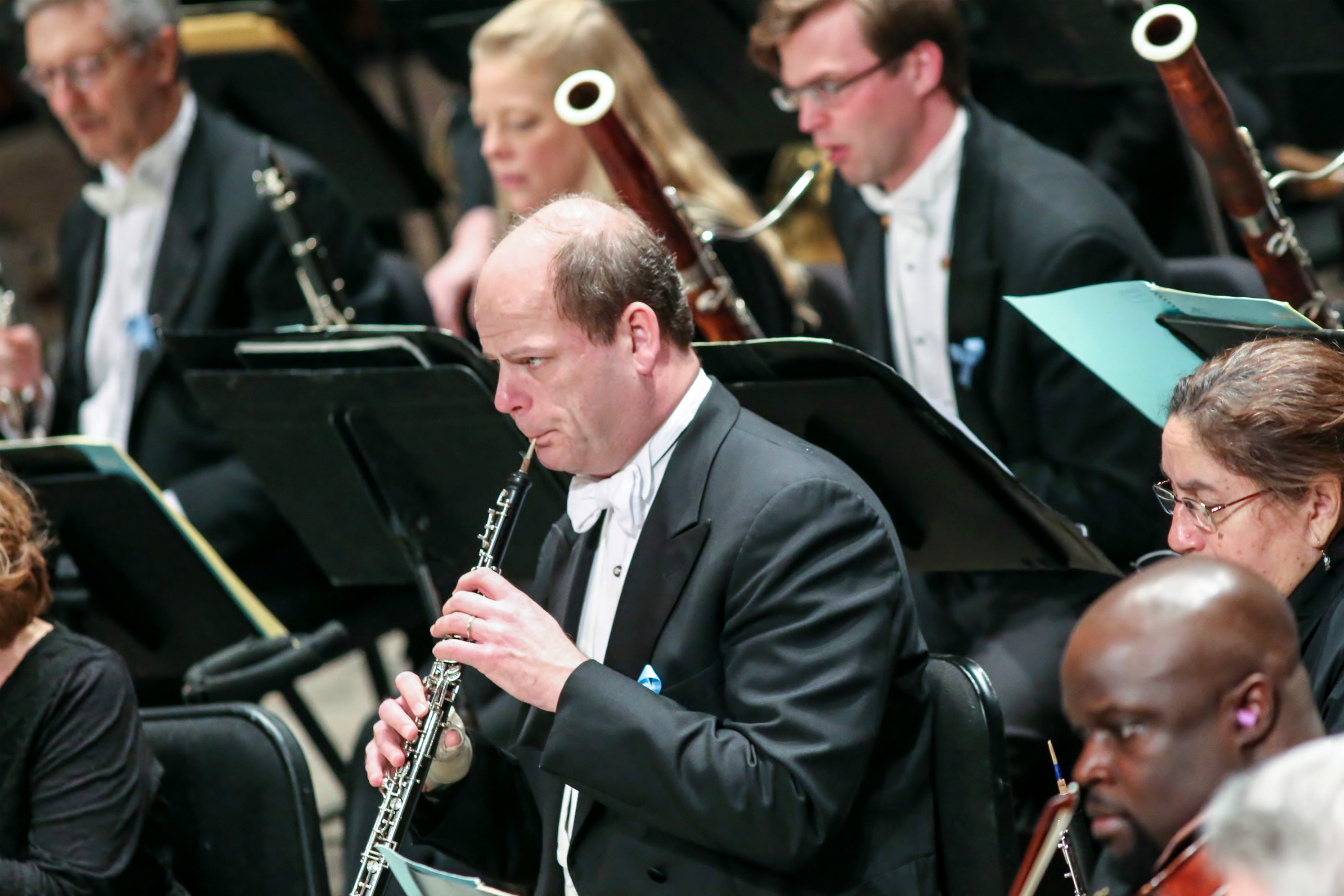
When most people think of opera, they think of the singers on the stage. However, in an opera, the orchestra plays an equally important role. Grand Rapids Symphony musicians Barbara Corbató, Assistant Principal Viola, and Alexander Miller, Assistant Principal Oboe, understand this well.

“The orchestra and voices on stage are so dependent on each other. As artists, we all have a great love of and dedication to the art form,”Corbató said.

Barbara Corbató; Photo: Terry Johnston | Grand Rapids Symphony

Miller, who played his first opera at The Metropolitan Opera while attending The Julliard School in New York City, enjoys the extra element of musical storytelling and action on the stage that the opera offers. “I wouldn’t ever want to play in an orchestra that never got to do an opera.”

An opera production requires that the orchestra musicians approach each performance differently than they would a symphonic concert.

“Playing an opera is like running a marathon in terms of focus and physical endurance. When an act begins, we are completely focused until each act ends, sometimes up to ninety minutes later. And then after intermission, we come back to do it again,” Corbató said. “On opera days, I have to plan my day so that I don’t over practice or play too much so that I have good endurance for the rehearsal or performance.”

For Miller, the ability to use abstract thinking is important when playing in the pit. Because the musicians cannot directly see what’s happening on the stage, they rely on the conductor to guide them. “You’re not going to be able to sit down and know exactly what’s happening in every bar, just because there’s so much dealing with the action on the stage.”

Collectively, Miller and Corbató have over 50 years of experience performing with Opera Grand Rapids as part of the Grand Rapids Symphony. Through the years, they have racked up some entertaining stories. Perhaps the best story is how Miller began his career performing in opera.

Alexander Miller; Photo: Terry Johnston | Grand Rapids Symphony

“The very first time I got to play at The Met, it was a very last minute substitute, like eight minutes before curtain,” said Miller.

The slotted oboist was stuck in traffic on the Holland Tunnel. After being asked the question “How fast can you get in a tuxedo,” Miller found himself buttoning his shirt in the elevator and sprinting into the pit.

“The first thing was an oboe entrance in the overture to Mozart’s The Marriage of Figaro. I played the entire first act before the second oboist arrived. What a crazy way to make an entrance!”

Corbató’s best memory wasn’t from the pit, but rather from the stage at Opera Grand Rapids’ 1996 production of Rigoletto.

“One of the fun times that I had, I think it was Rigoletto, I did the onstage string quartet. We had to play up to a certain point in the pit and then race up to the stage to get in place to play on stage, getting on stage in time and then getting back down to the pit to play. We were in quite in a hurry. It was really fun to play on stage with the set.”


About Barbara Corbató

Barbara Corbató is currently Assistant Principal Viola of the Grand Rapids Symphony, where she has performed since 1990 and is also a member of the GRS’ Calder String Quintet. In addition, she is an active chamber musician- a member of the Perugino String Quartet since 2007, and performing regularly at the Chamber Music Festival of Saugatuck. Ms. Corbató also is active as a viola teacher, serving on the viola faculties at Hope College while also maintaining a home studio. She also has taught viola at Aquinas and Calvin College.

Ms. Corbató grew up in Columbus, Ohio, then attended the University of Michigan, where she received Bachelor and Master of Music degrees in Viola Performance. Before moving to Grand Rapids, she performed in the New World Symphony of Miami, Florida, the Spoleto Festival of South Carolina and Italy, and the orchestras of Columbus, Flint, and Saginaw. She has also participated in music festivals in Santa Barbara and Aspen.

About Alexander Miller

Alexander Miller, who splits his time equally between composing and performing on oboe, has written many large orchestral works including “Fireworks,” performed in Carnegie Hall for the Grand Rapids Symphony’s 75th anniversary, “Let Freedom Ring,” which has been narrated by James Earl Jones, Danny Glover and former president Bill Clinton, “Encaustic,” a clarinet concerto depicting wax painting, “Madame Bovary,” a cello concerto inspired by Flaubert’s impossible dreamer, and his recent “Rocomoji,” a modern concerto grosso that takes a serious look at the emoji phenomenon.

His music has been hailed as “stunning” (American Harp Society), “otherworldly” (Tacoma News Tribune), “engaging and energetic” (Modesto News), and anything from “magnificent,” “haunting” and “imaginative” to “intricate” and “sly and whimsical” (Grand Rapids Press). About his orchestral tone puzzle “Scherzo Crypto,” a senior critic at the San Antonio Express-News wrote that his “vibrant, propulsive” music “recalled in some ways the best mid-20th century American symphonists.” When he was a resident composer at the 2016 Cabrillo Music Festival with Marin Alsop, artssf.com called him “clever, unique – a composer with something of Alan Turing within him.” Arts and Culture Texas Magazine delivered a rave review of the world premiere of “Rocomoji,” calling it “brilliant … you have to hear it to believe it. Miller’s writing is deliciously evocative, imaginative, and humorous.” Most of his commissions and premieres have originated in Grand Rapids, where the Grand Rapids Press has called him “Assistant Principal Oboist by title, Composer-in-Residence by default.”

Miller was born in Bloomfield Hills, Michigan in 1968 to an art-loving mother and an auto executive father, then spent his childhood living in Mexico, Australia and Venezuela before returning to Michigan for high school. He completed his musical training at The Juilliard School in New York and holds B.M. and M.M. degrees in oboe performance. Shortly after graduating in 1992, he won the national audition for Assistant Principal Oboe with the Grand Rapids Symphony.

In addition to his orchestral duties, Miller is an oboist, conductor and composer with Ensemble Montage, a chamber group dedicated to performing the myriad challenging works of the past century. He also plays with the Wünderwind Quintet and travels to elementary schools to teach children about the basic elements of building music.

In 2009, Miller received the diagnosis of a rare recurring brain tumor that forced him to undergo two brain surgeries followed by a long rehabilitation. Working his way back to a life of performing and composing is his proudest accomplishment, and he blogs about his experiences as a patient regularly, stressing the importance of humor and honesty as a path to healing. He is married to Grand Rapids Symphony violist Mary Jane Miller and they enjoy life together with their poodle, JoJo. His other interests include mushroom hunting, puzzles, modern art, aviation, and wine.


Figaro gets his own ice cream flavor

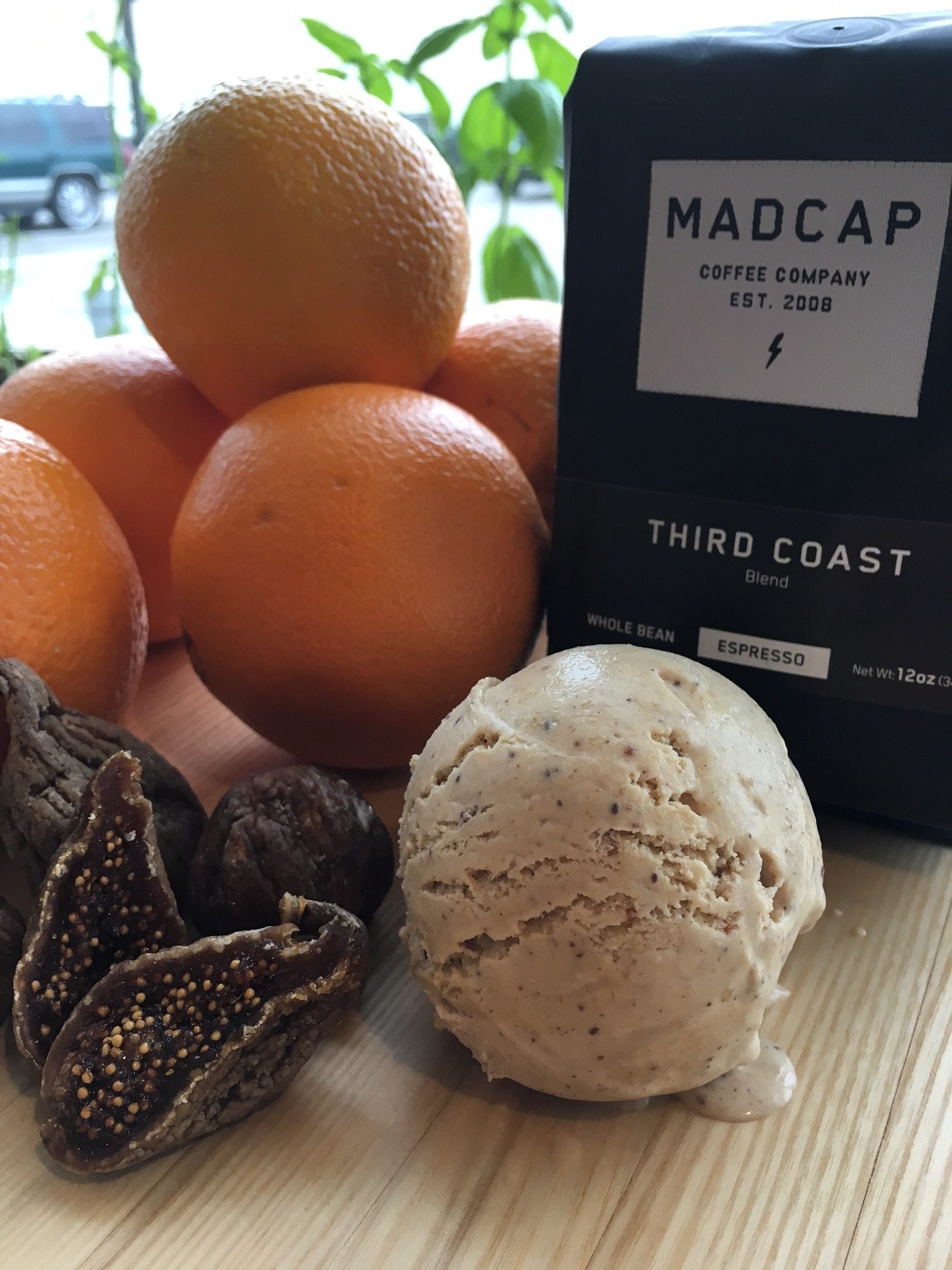
Opera Grand Rapids teams up with Love’s Ice Cream (yet again) to unveil a new ice cream flavor in celebration of Opera Grand Rapids’ upcoming production of The Barber of Seville.

Inspired by The Barber of Seville’s title character–the ever-wacky, madcap barber, Figaro–the flavor features Madcap coffee ice cream swirled with a Seville orange and Fig jam. Meet the Madcap Figaro!, available for a limited time only at the Love’s Ice Cream store in the Downtown Market. The specialty flavor is available from now until May 13. Don’t miss your chance to get a taste!

For more information on Love’s Ice Cream, visit lovesicecream.com.

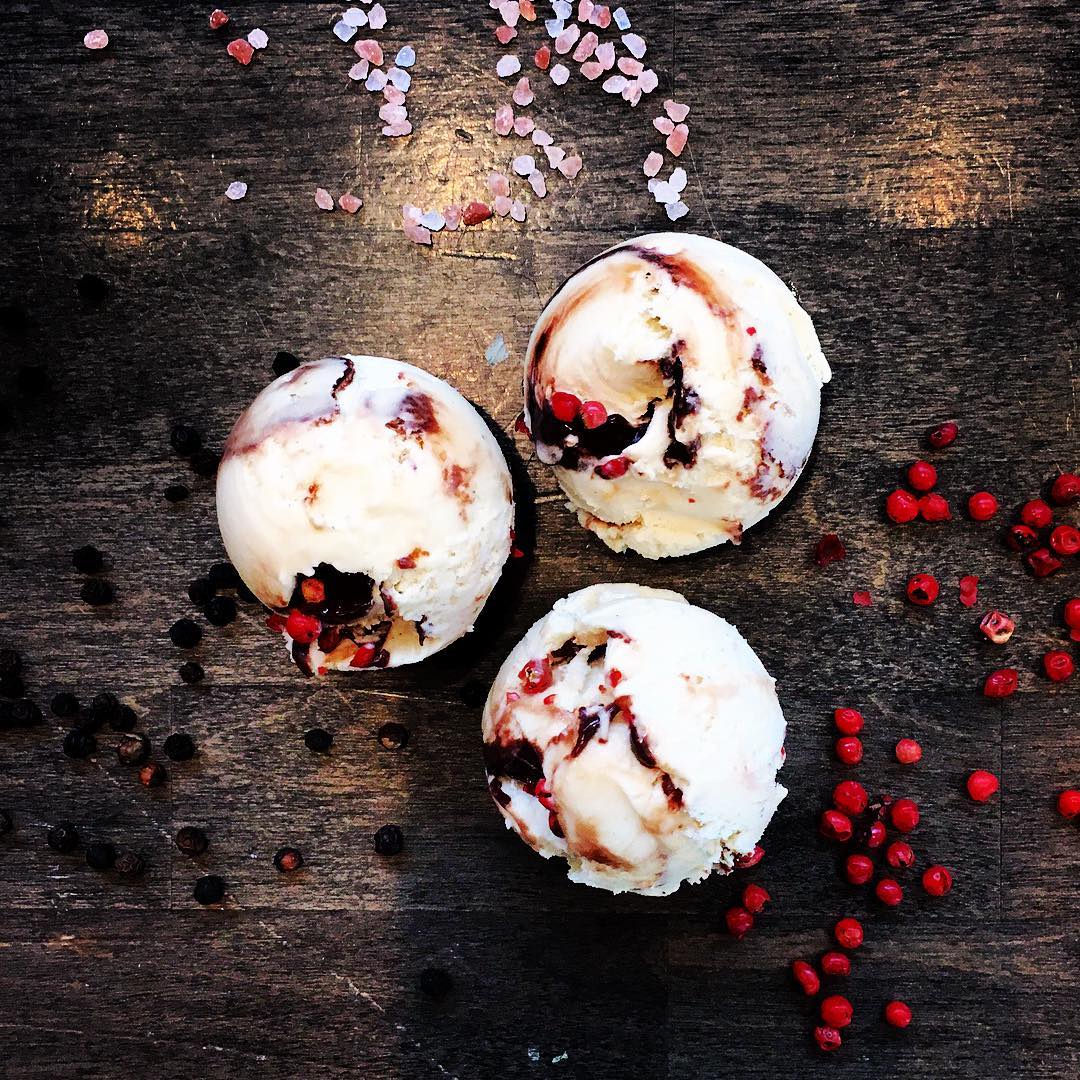
Opera Grand Rapids and Love’s Ice Cream began partnering in 2014 to bring you specialty ice cream flavors in honor of each opera production. Take a look back at the previous creations below!


A healthy extra dark chocolate flavor “The Darkest Depths of Hellth” for Orpheus and Eurydice.
Contrasting ingredients meet in “Fortune’s Fool” flavor inspired by Romeo and Juliet.
The Student Prince tenor Justin John Moniz tastes “Three Golden Apples” ice cream flavor.
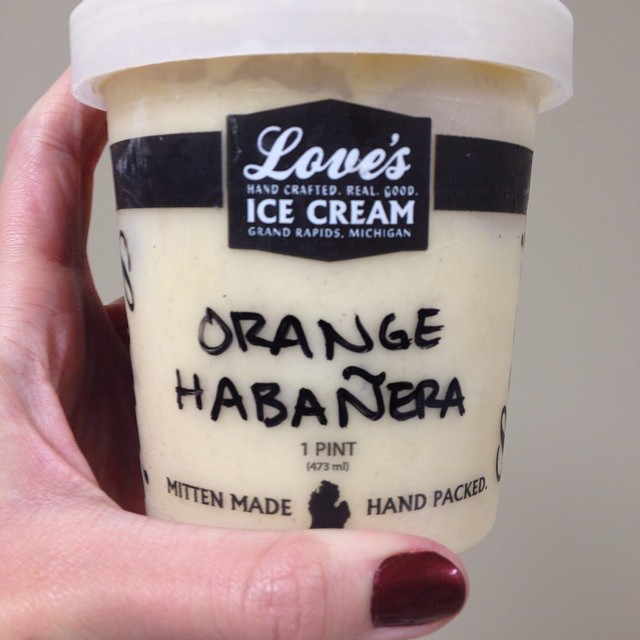
Spicy yet sweet, “Orange Habanera” inspired by Georges Bizet’s Carmen
“Red Light Tango-rine” flavor for Astor Piazolla’s Maria de Buenos Aires.